
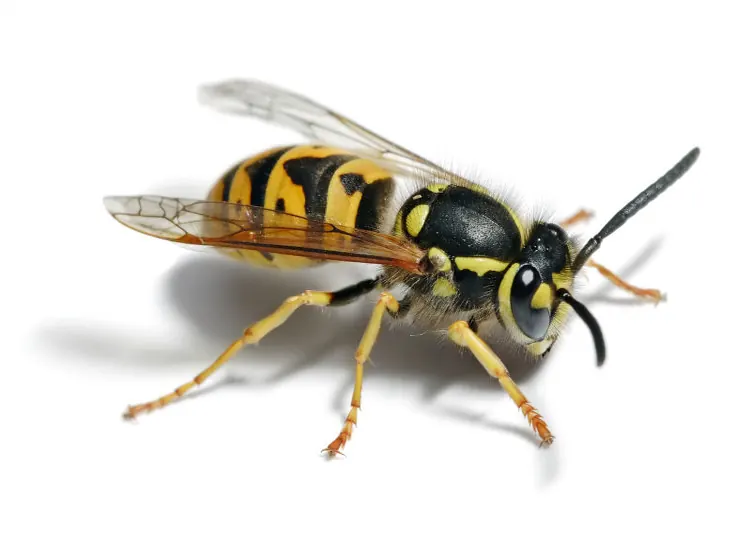
The safest way to deal with a wasp nest is to have it treated at the nest itself, then removed once the wasps are dead. Swatting, spraying from a distance or knocking the nest down with a broom usually ends in stings. In Faerie Glen, nests turn up on eaves, patio roofs, carports, pergolas, gate motors and window frames from spring through to late summer.
The wasps we deal with here
Paper wasps
These are the most common. Long-legged, slender wasps that build an open, umbrella-shaped comb of grey papery cells, hanging from a short stalk. You can see the cells and often the larvae inside. Nests start small in spring and grow through the season. Paper wasps defend their nest vigorously when it's disturbed, and they can sting more than once.
Mud daubers and potter wasps
Solitary wasps that build small mud cells or pots on walls, inside garages and under furniture. They rarely sting people and usually aren't aggressive. Unless they're in an awkward spot, they often don't need treatment at all.
Why Faerie Glen homes get so many nests
Wasps need three things: sheltered places to build, a water source and plenty of insects or caterpillars to feed their larvae. Faerie Glen offers all of them. Wide eaves, covered patios and pergolas give shelter from summer storms. Pools, birdbaths and irrigation give water. And with the reserve's grassland and the suburb's established gardens, there's no shortage of caterpillars and other insects. Homes facing the reserve, or with large gardens, tend to see the most nests.
How we remove a wasp nest
- We find and assess the nest, and check for others nearby. Where there's one nest, there are often two or three.
- We apply a targeted treatment directly into the nest, which kills the wasps there and those returning to it.
- Once activity has stopped, we remove the nest so it isn't rebuilt on the same spot.
- Where nests keep appearing in the same place, we can treat that surface with a residual product to discourage rebuilding.
You don't have to leave the house, but keep everyone, especially children and pets, inside or well away while we work on the nest.
What not to do
Don't hose the nest, hit it or try to burn it. All three anger the colony and the wasps will target whoever is closest. Avoid spraying an aerosol at a nest above your head too: you'll be standing right in the flight path of any wasp that survives. If anyone in the household is allergic to stings, leave nests entirely to us.
Signs a nest is nearby
Sometimes you notice the wasps before the nest. Several wasps flying in and out of the same corner of the roof, repeatedly landing on the pool edge or birdbath to drink, or scraping at a wooden fence or deck for nest material all suggest a colony close by. Follow their flight line in the morning, when they're busy, and you'll usually find it.
Retirement villages and complexes
In retirement villages, a nest over a walkway, at a unit's front door or above communal seating is a real risk to residents with slower reactions or allergies. In complexes, nests often sit on a carport or shared wall where no one feels responsible. We work with village managers and body corporates to check common areas in spring, deal with nests while they're small, and come back if new ones appear.
A tip for spring
Have a walk around the house in September and October and look up: under eaves, inside the patio roof, around the gate motor housing and along gutters. A new paper wasp nest at that time is often just a few cells with one queen. Spotting it then means a much smaller, easier treatment than dealing with a full-sized nest in January.
What does it cost?
Price depends mainly on how many nests there are, how high or awkward they are to reach, and whether surfaces need a residual treatment to stop rebuilding. A single, easily reached nest is quick. Several nests on a double-storey roofline take longer. A tiny, newly started nest with no wasps on it can sometimes simply be knocked off with a long pole at dusk, but if wasps are present, or you're not sure, call us.
Wasps are part of the bigger summer picture covered by flying insect control in Faerie Glen. Our city-wide page on wasp nest treatment in Pretoria has more detail, and residents of the neighbouring suburb can look at wasp removal in Lynnwood. Other local pests are on our Faerie Glen services page.
One Stop Pest Control is SAPCA registered. If wasps rebuild on a treated spot within three months, we'll return and deal with it. Call 012 012 5526, or WhatsApp us a picture of the nest from a safe distance.
Questions we get asked
Is it safe to remove a small wasp nest myself?
Only if it's very new, has no wasps on it and is easy to reach. Anything with active wasps, or above head height, is safer left to us.
Will the wasps come back to the same spot?
They sometimes do if the old nest is left in place. Removing the nest, and treating the surface where needed, makes rebuilding less likely.
What should I do if someone is allergic to wasp stings?
Keep them well away from the nest and have their medication on hand. If they're stung and show signs of a severe reaction, get medical help immediately.
When is wasp season in Pretoria?
From early spring to late summer, with nests largest in mid-summer. Activity drops off as the weather cools in autumn.
Are mud daubers dangerous?
Rarely. They're solitary and seldom sting people. We only treat them if their mud cells are somewhere awkward or unsightly.
Do you treat wasp nests in complexes and villages?
Yes. We can check common areas, carports and walkways, and deal with nests as part of a scheduled visit.