
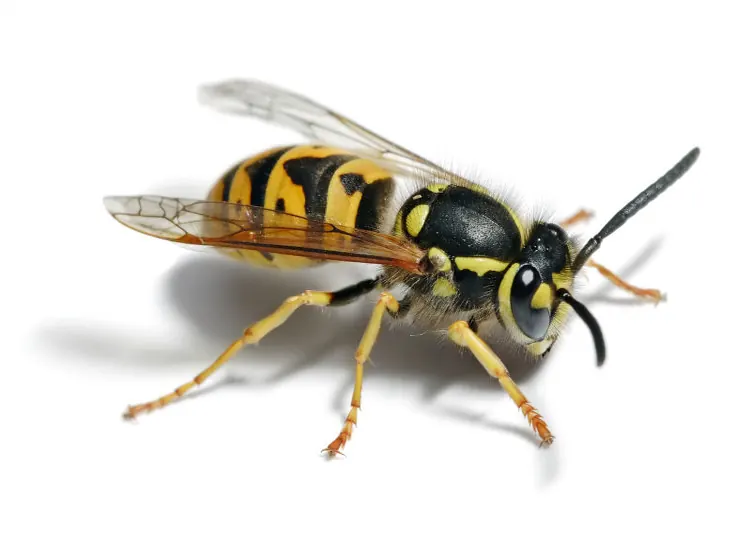
A wasp nest close to a door, window, patio or play area is worth dealing with before it gets bigger. We treat the nest directly with a targeted nest treatment, which kills the colony without spraying the whole house, and then remove it where it can be reached safely. If the nest is out of the way and not bothering anyone, we might suggest leaving it, because wasps also eat garden pests.
The wasps we see in Moreleta Park
Paper wasps
These are the common ones. They build open, umbrella-shaped grey paper nests, often hanging from a single stalk, under eaves, carports, patio roofs, pergolas, gutters and window frames. The suburb's homes, with their deep eaves, covered stoeps and lapas, offer plenty of sheltered spots. Paper wasps defend their nests, and a sting near the face or for someone who's allergic can be serious.
Mud wasps
Mud daubers and potter wasps build small mud cells on walls, inside garages, in folded curtains and on stored items. They're solitary and rarely sting people. Their nests are more of a nuisance than a risk.
Larger wasps around the garden
You'll also see large hunting wasps in the garden, some of them looking intimidating. They're generally solitary and not aggressive unless handled.
When and where nests appear
Paper wasps start new nests in spring, often with just one queen building a small comb. Through summer the colony grows quickly. By late summer, a nest under the patio roof can be the size of a dinner plate, with wasps defending a wide area around it. Nests near doors, braai areas, pool decks and children's play equipment cause the most problems.
In complexes, wasps often build under the shared rooflines and carports, which makes them a body corporate matter as well as a household one. Schools and offices in the area face the same issue with covered walkways and parking bays, where a nest above a busy path can put many people at risk of a sting in a single afternoon.
Allergies change the urgency
For most people a wasp sting is painful but passes. For someone with a sting allergy, it can be an emergency. If anyone in your household has reacted badly to a sting before, treat any nest near the house as urgent, and keep that person well away while it's being dealt with.
How we treat wasp nests
- Locate and identify. We confirm the type of wasp and the size of the nest, and check for others nearby. Where there's one nest there are often several.
- Targeted nest treatment. We treat the nest directly so the colony is killed, using the right protective equipment.
- Removal. Once the colony is dead, we remove the nest where it's safe and accessible.
- Preventive treatment. Favourite nesting spots under eaves and patio roofs can be treated to discourage new nests.
Keep children and pets away while we work, and off treated surfaces until they're dry.
What people commonly get wrong
Knocking the nest down with a broom or blasting it with a hosepipe. That scatters an angry colony, and the surviving wasps usually rebuild nearby within days. Another mistake is tackling a nest at the top of a ladder. A few stings can make you lose your balance, and a fall from that height is a far bigger risk than the stings.
Preventing new nests
- Check eaves, carports, patio roofs and the underside of garden furniture every couple of weeks in spring, when nests are small.
- Seal gaps in fascias and roof tiles where wasps could build inside.
- Keep bins closed and clean up fallen fruit, which attracts wasps late in summer.
- Don't leave sweet drinks open outside.
Local tip: lots of Moreleta Park homes have a covered braai area or lapa with exposed timber rafters. Paper wasps love the angles where those beams meet. A quick look along the rafters each spring, when a nest is only the size of a coin, saves a much bigger job later.
What does it cost?
Wasp nest treatment is priced on the number of nests, their size, and how hard they are to reach. A single nest under a low patio roof is a quick, simple job. Several nests high in the eaves of a double-storey house, or across a complex's carports, take more time and equipment. A tiny, newly started nest can sometimes be dealt with yourself using a wasp spray from a safe distance, if no one in the house is allergic.
For other flying pests, see our flying insect service in Moreleta Park. For the rest of the city, there's wasp nest removal in Pretoria, and we're often in Faerie Glen for wasp nests too. Our Moreleta Park overview lists everything else.
If the wasps rebuild on a treated spot within three months, we'll return under our guarantee. Call 012 012 5526, or WhatsApp us a photo of the nest so we can see what we're dealing with.
Questions we get asked
Can I knock down a wasp nest on my own?
Only a very small, new nest, low down, when no one in the house is allergic. Larger nests or nests high up are safer left to us.
Why do wasps keep building in the same place?
Sheltered spots under eaves and patio roofs suit them, and new queens often choose the same areas each spring.
Are paper wasps aggressive?
They defend their nest. If you leave them alone and they're away from doors and play areas, they rarely sting.
Do you treat wasp nests in complexes?
Yes. We can treat nests under shared rooflines and carports on behalf of the body corporate.
When is the best time to deal with wasp nests?
In spring, when nests are small and the colony is just starting. They grow quickly through summer.
What should I do if I'm stung?
Remove yourself from the area, wash the sting and apply a cold compress. Get medical help immediately if there's swelling of the face or difficulty breathing.