
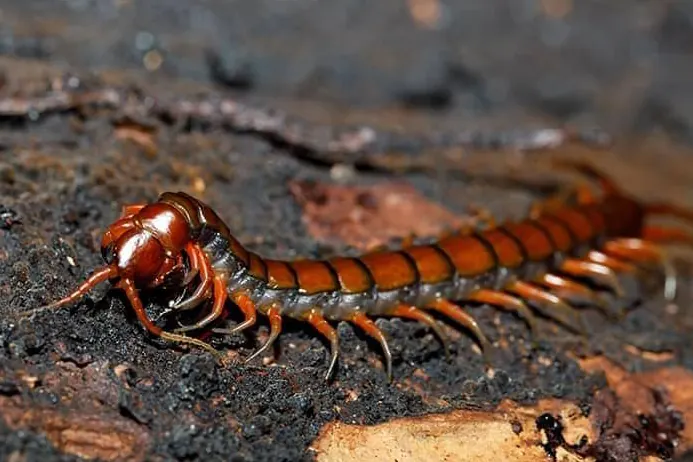
Centipedes in the house are usually a sign of two things: damp shelter close to the building, and plenty of small insects for them to hunt. Deal with both and the centipedes drop off. Where they keep coming in, we treat the damp hiding places outside and the entry points into the house with an odourless, non-staining residual product.
Centipede or millipede?
People often mix them up, but they're quite different. Centipedes are flattened, fast-moving hunters with one pair of legs per body segment and a pair of venom claws just behind the head. They can give a painful bite if handled. Millipedes, the shongololos, are rounded, slow, with two pairs of legs per segment, and they feed on decaying plant matter. They don't bite. If you're seeing slow, curling, cylindrical creatures after rain, see millipede control in Moreleta Park instead.
Why centipedes turn up in Moreleta Park homes
In summer, the afternoon thunderstorms soak gardens across the suburb. Centipedes shelter under pot plants, paving bricks, leaf litter, compost and the thick ground covers that many older gardens have along the house walls. When those spots get waterlogged, or when the weather turns hot and dry afterwards, centipedes move. Doors, weep holes, gaps under garage doors and floor drains are easy routes inside.
Inside, they head for the dampest places: bathrooms, laundries, the space under the kitchen sink, and garages with a bit of moisture. In townhouses, ground-floor units and those next to the communal garden see the most.
Signs to look for
- Fast, flat, many-legged creatures, often seen at night or early morning
- Centipedes trapped in the bath, the basin or the shower
- Regular sightings near floor drains, the back door or the garage
- Many centipedes under pots and pavers when you lift them
Are they dangerous?
Most centipedes found in Pretoria homes are small and pose little real risk. Larger ones can bite if picked up or trapped against skin, and the bite can be very painful, with swelling. Bites aren't usually serious for healthy adults, but children, the elderly and anyone who has a strong reaction should see a doctor. The main point: don't handle them with bare hands.
How we treat centipedes
- Inspection. We look for the damp shelter around the house and the gaps they're using to get in, plus any insect problem feeding them.
- Outdoor treatment. Residual treatment around the base of walls, beds against the house, paving edges and other sheltering spots.
- Entry points. Doors, weep holes, garage doors and drains are treated to stop them coming in.
- Indoors where needed. Bathrooms, laundries and garages, if centipedes are already living inside.
Keep pets and children off treated surfaces until dry. There's no need to leave the house.
A common mistake
Killing every centipede in the house but leaving the damp mulch, the stacked pots and the leaking garden tap right up against the outside wall. That shelter keeps producing more. Another frequent mistake is ignoring the insects: centipedes are hunters, and a house with cockroaches, fishmoths or crickets is a well-stocked larder for them.
Keeping centipedes out
- Pull mulch, ground cover and leaf litter back from the house walls.
- Store pots, pavers and timber off the ground and away from the building.
- Fix dripping outside taps and gutters that soak the same strip of soil.
- Fit door sweeps and keep floor drain covers in place.
- Run the bathroom extractor fan and dry the bath and shower floor after use.
Moreleta Park tip: in older homes with sunken garden beds alongside the bedroom wing, the beds often hold water after storms right next to the walls. Lifting the soil level slightly away from the wall, or adding a strip of gravel along the base, dries out that zone and reduces centipede pressure noticeably.
What does it cost?
It depends on the size of the property, how much damp shelter there is to treat and whether centipedes are already living indoors. A townhouse with a small garden is a quick treatment. A large property with extensive beds against the house takes longer. If you only see one now and then after heavy rain, clearing the damp debris from around the walls may be all you need.
For other pests in the area, see pest control in Moreleta Park. If you'd like to compare with our wider service, there's centipede treatment across Pretoria, and we also look after centipede problems in Faerie Glen.
If centipedes are back within three months of our treatment, we come back to sort it out. Phone 012 012 5526, or WhatsApp us a picture so we can confirm what you're seeing.
Questions we get asked
Do centipedes bite?
Yes, they can if handled or trapped against skin. Most bites from small house centipedes are minor, but larger ones can cause painful swelling.
Why do centipedes come into the bathroom?
They're looking for moisture and small insects. Bathrooms, especially ones that stay damp, offer both.
Are centipedes good for the garden?
In the garden, they're useful predators of insects. They're only a problem when large numbers move into the house.
Why are centipedes worse after the rain?
Heavy rain floods their shelters under pots, paving and mulch, and they move to drier ground, which is often your house.
What's the quickest way to tell centipedes and millipedes apart?
Centipedes are flat and fast with one pair of legs per segment. Millipedes are round, slow and have two pairs of legs per segment.
Do I need to treat inside as well as outside?
Usually the outside and the entry points matter most. We only treat inside if centipedes are already living indoors.