
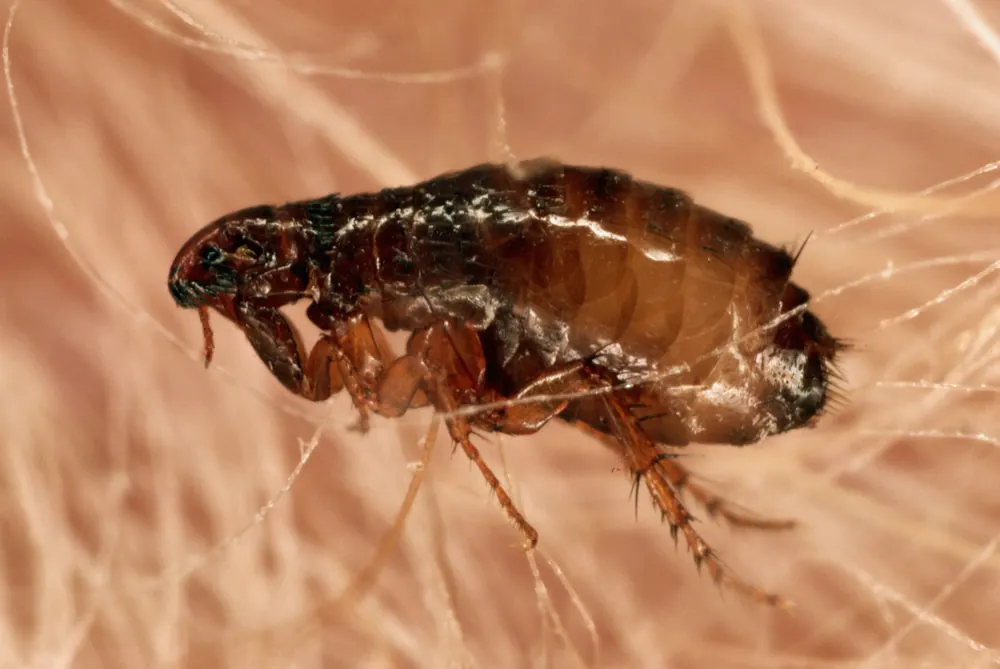
Treating fleas properly means dealing with three things at once: the animals, the house and the garden. Only a small part of the flea population is on your pet at any moment. Most of it is in carpets, dog beds, under furniture and in the shady parts of the yard as eggs, larvae and pupae waiting to hatch. Our flea treatment covers the home and garden; your vet covers the animals.
Why fleas do well in Moreleta Park
This is a suburb of family homes, many of them with a dog or two, and often a cat. Dogs spend time lying in the same shady spots: under a tree, beside the wendy house, in the gap under a deck, on the stoep mat. Those warm, sheltered, slightly dusty spots are where flea larvae develop best. In summer, with the heat and the afternoon rain, flea numbers rise sharply.
Fleas also arrive with stray cats crossing walls, with hedgehogs and with other wildlife moving along gardens near the open ground by the spruit. A new puppy or a rescue dog can bring them in too. And people who move into a house where the previous owners had pets sometimes find a flea problem waiting, because pupae can lie dormant in an empty house and hatch when new occupants arrive.
Understanding the flea life cycle
An adult flea feeds on your pet and lays eggs that drop off wherever the animal goes. The eggs hatch into tiny larvae that hide in carpet fibres, between floorboards and in soil, feeding on debris and flea dirt. The larvae spin cocoons and become pupae, which can wait for a long time before hatching when they sense warmth, vibration and carbon dioxide. That's why a treatment has to reach the places where the immature stages live, not only the adults you can see.
Signs of fleas
- Small, itchy bites, usually around the ankles and lower legs
- Pets scratching, biting at their back or tail base, or losing patches of fur
- Tiny dark specks in pet bedding that turn reddish when dampened (flea dirt)
- Small, fast, jumping insects on light floors or white socks
How we treat fleas
- Inspection. We find where the pets rest and sleep, indoors and out, because that's where the flea population is concentrated.
- Indoor treatment. We apply an odourless, non-staining residual treatment to carpets, rugs, under furniture, along skirting boards and in pet sleeping areas.
- Outdoor treatment. Shady resting areas, under decks, kennels and along the base of walls are treated where the dogs spend time.
- Follow-up where needed. Flea pupae are resistant to treatment, so new fleas can emerge for a short while afterwards. In heavy cases we come back to finish the job.
Keep pets and children off treated areas until they're dry. You don't need to leave the house.
The step people skip
The most common mistake is treating the dog and nothing else, or treating the house and not the dog. Either way, the fleas just cycle back. Book your pets' flea treatment with your vet at the same time as ours. The second mistake is panicking when you see a few fleas a week later. Some newly hatched fleas are normal for a short time and will die after contact with treated surfaces. Keep vacuuming.
Prevention
- Keep pets on a regular flea preventative recommended by your vet.
- Wash pet bedding often on a hot cycle.
- Vacuum carpets, rugs, couches and the car regularly, and empty the vacuum outside.
- Mow and rake shady spots where the dogs lie, and keep leaf litter down.
A Moreleta Park tip: lots of homes here have a covered stoep or patio where the dogs sleep on a mat or old blanket. That one spot can be the main flea nursery on the property. Replace or wash those mats regularly in summer, and sweep the area underneath.
What does it cost?
The price depends on the size of the house and garden and how many rooms and outdoor areas the animals use. A small townhouse with one cat is a modest job. A large property with several dogs and a big garden takes longer. If you've caught it early, good pet treatment from the vet plus thorough vacuuming may be enough. If fleas are still biting after a few weeks of that, call us.
For other biting pests, see biting insect control in Moreleta Park, or go back to our main Moreleta Park page. For the rest of the city, there's flea treatment in Pretoria, and we also treat fleas in Faerie Glen homes.
We've treated fleas in Pretoria homes for 25 years. If the fleas come back within three months of our treatment, we'll return. Call 012 012 5526, or send a photo on WhatsApp if you're not sure what's biting.
Questions we get asked
Why am I still seeing fleas a week after treatment?
Flea pupae aren't affected by treatment until they hatch. Newly emerged fleas die after contact with the treated surfaces, so a few for a short while is normal.
Does the dog need its own flea treatment?
Yes. Speak to your vet about the right flea product for your animals and time it with our home treatment.
Why do fleas bite me and not my husband?
Fleas do seem to bite some people more than others, and some people react more strongly to the bites. Both of you are likely being bitten.
Can fleas live in the garden?
Yes. Shady, sheltered spots where pets rest are ideal for flea larvae, which is why we treat outdoors as well as inside.
We moved into an empty house and now have fleas. Why?
Flea pupae can lie dormant for weeks in an empty house and hatch when they sense movement and warmth from new occupants.
Should I vacuum after treatment?
Yes, once surfaces are dry. Vacuuming stimulates pupae to hatch and come into contact with the treatment, and removes eggs and larvae.