
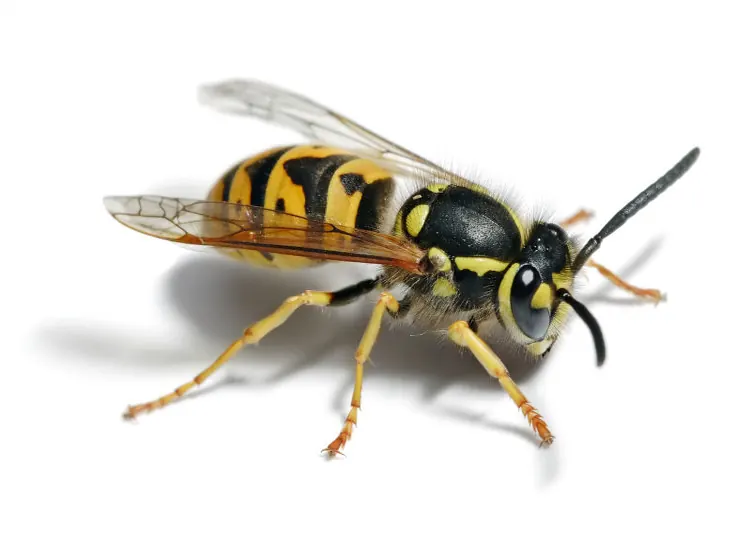
If paper wasps are building under your eaves, in the pergola, behind a shutter or in a hedge near the pool, we can treat the nest and remove it safely. Small nests caught early are quick to deal with. Bigger ones, high ones and nests close to doors or play areas need protective gear, the right product and a little patience to make sure every wasp is dealt with.
What's building near your house
Paper wasps
The most common wasps around Waterkloof homes are paper wasps. They build open, umbrella-shaped grey nests with visible cells, hanging from a short stalk. Queens start nests alone in spring, and by midsummer a single nest can hold a sizeable colony. They're defensive near the nest and sting repeatedly.
Mud daubers and potter wasps
These build small mud cells or pots on walls, window frames and in garages. They're solitary, rarely sting people, and are often left alone unless they're in an awkward place.
Why Waterkloof sees a lot of wasp nests
Large homes with broad, deep eaves, covered patios, carports, pergolas and outbuildings offer far more sheltered overhangs than a small townhouse. Many houses are double-storey, so nests often start high under the roofline where nobody notices until they're well established. Mature trees and dense hedges near the house add more sites, and the insects in a big garden are food for the developing young. Pool areas and outdoor entertainment spaces with sweet drinks and food draw foraging wasps in summer.
Signs to look for
- Wasps flying repeatedly to the same spot under the eaves or patio roof
- A grey, papery nest under a gutter, shutter, light fitting or garden umbrella
- Wasps around a hedge, gate or postbox
- More wasps than usual around the pool and braai area
How we remove a nest
- Assess. We check how big and how high the nest is, and whether there are others nearby. Large stands often have more than one.
- Treat the nest. We apply a targeted nest treatment directly to the nest, using protective equipment.
- Remove it once activity has stopped, so returning wasps don't rebuild on the same spot.
- Treat favourite sites. Where wasps keep returning to the same eaves, we can treat the surface to discourage new nests.
If the nest is on a high roofline, we'll tell you upfront whether it can be reached safely with ladders or needs other access.
Wasps and households with allergies
If anyone in the house is allergic to stings, don't wait for a nest to grow. Let us know when you book, and we'll treat the nest as a priority and check the rest of the property for others while we're there. Embassies and residences that host outdoor functions in summer often ask for a check of the garden and entertainment areas beforehand, which is a sensible precaution.
Where people go wrong
Knocking a nest down with a broom or a hosepipe. It breaks the nest, but the wasps survive, become very aggressive and often rebuild nearby within days. Spraying a big nest from close range with a household can is another common way to get stung several times, especially standing on a ladder. Keep your distance and keep children and pets away from the area until it's treated.
A Waterkloof tip
Walk around the house in early spring, around September, and look under the eaves, the patio roof and any shutters with a pair of binoculars or your phone camera zoomed in. A queen's starter nest is the size of a coin and easy to remove at that stage. On a big double-storey house, a quick check then saves a much bigger job in January.
What does wasp nest removal cost?
It depends on how many nests there are, how big they've grown, how high they are and how easy they are to reach. A single small nest at head height is a modest job. Several large nests under a double-storey roofline, or a nest inside a wall cavity, take more time and equipment. If you spot a tiny starter nest with one wasp on it at an easy height, you can often knock it down yourself in the cool of the evening.
More on wasp species and seasons is on our wasp control page for Pretoria. Wasps are part of a wider flying-insect season here; see flying insect treatments in Waterkloof and fly control for Waterkloof homes. Everything else we treat locally is on the Waterkloof pest control page, and we also remove wasp nests in Garsfontein.
We're SAPCA registered with 25 years of experience, and if a treated nest becomes active again within three months, we come back. Call 012 012 5526, or WhatsApp us a photo of the nest and where it is.
Questions we get asked
Can I remove a wasp nest myself?
A tiny starter nest at an easy height, yes, in the evening when wasps are less active. Large, high or busy nests are best left to us.
Will the wasps come back to the same spot?
They often prefer the same sheltered areas year after year. Removing the old nest and treating the surface helps discourage them.
When is wasp season in Pretoria?
Queens start nests in spring, and colonies grow through summer. Nests are largest and wasps most defensive from about December to March.
Is it safe to swim while there's a wasp nest near the pool?
It's best to keep people away until the nest is treated. Wasps defend the area around the nest, and splashing and movement can trigger them.
What should I do if I'm stung?
Move away from the nest, wash the area and use a cold compress. If there's swelling of the face or throat, or difficulty breathing, get medical help immediately.