
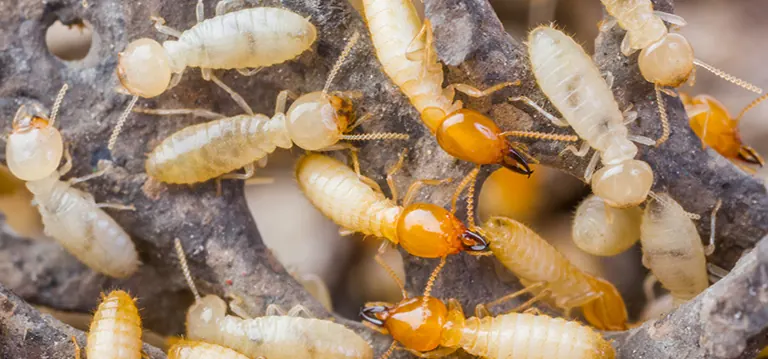
If you've found mud tubes on a wall, a skirting board that sounds hollow, or a lawn turning bare in winter, book an inspection before anyone sprays anything. In Waterkloof the answer could be one of two very different termites, and the older the house, the more likely it is that the one in the walls has been at work for a while.
Why Waterkloof houses are vulnerable
Many homes here were built long before modern pre-construction soil treatments were standard, and any treatment that was done has long since worn off. Add the things that make these properties attractive, such as wooden floors, built-in cupboards, timber window frames, panelled studies and big roof structures, and you have a lot of food sitting on soil that termites have been living in for generations.
The gardens play a part too. Flowerbeds raised against the walls over the years, creepers covering the plaster, tree roots cracking paving and old stumps left in the ground all give termites cover and a route to the foundations. Renovations and extensions, common in an established suburb like this, disturb the soil and can open new paths in.
Two termites, two different jobs
Subterranean termites
These are the ones that damage buildings. They stay inside sealed mud tunnels, so you seldom see them, only their tubes on foundations and inside cupboards, timber that crumbles when pressed, or paint that blisters over their galleries. In a house with timber floors, the first sign is sometimes a floorboard that gives a little underfoot.
Harvester termites
Out on the lawn, harvester termites cut kikuyu and carry it underground. On a big Waterkloof lawn in a dry winter the bare patches can spread quickly. Small holes, little heaps of loose soil and short pieces of cut grass are the signs. They never touch the house.
What we do
- Inspect inside and out: foundations, floors, door and window frames, cupboards, the roof void where we can reach it, outbuildings, stumps and the lawn.
- Confirm the species and find where activity enters the structure.
- Treat to suit: registered soil treatments around and under the structure for subterranean termites, with baiting where drilling through old paving or floors isn't practical; treatment of active nest openings for harvester termites.
- Come back to check the tubes stay dead and the lawn holes stop reopening.
On larger stands we also check the garden cottage, garage and any timber decking or pergolas, because a colony feeding there can be the source of what eventually reaches the house. If the property has been extended over the years, we pay close attention to the joints between old and new sections, where slabs meet and gaps tend to open.
The thing people get wrong
The instinct is to knock the mud tubes down and spray. On an old house that's the worst thing you can do: it kills a handful of workers, sends the rest round another way you can't see, and removes the trail we use to trace them back. Leave the tubes exactly where they are until we've looked.
Another one we hear: "The house is solid brick, so termites can't hurt it." The brick is fine. It's the roof trusses, door frames, floors and cupboards inside that pay the price.
A Waterkloof tip
If a big tree has been taken down on your stand, have the stump ground out rather than left to rot. Old stumps and buried roots are a favourite food source, and a colony feeding on one in the garden can easily move on to the house next.
On ridge properties with rocky ground, termites follow cracks between stone and soil, so we check retaining walls and terraced beds along with the foundations.
What does termite treatment cost?
For harvester termites, the price follows the size of the lawn area that's affected, and it's usually a modest job. For subterranean termites, it depends on the perimeter of the house, whether we have to drill through paving, slabs or floors, how much timber is involved, any outbuildings, and whether baiting suits the building better. We quote after the inspection, never blind over the phone.
If you want the fuller background, our page on termite control across Pretoria covers the species and seasons in more detail. Termites aren't the only thing digging in a Waterkloof lawn; if you're seeing raised ridges rather than bare patches, read about moles in Waterkloof lawns. The broader picture for the suburb is on our Waterkloof pest control overview, and we do similar work in older homes through termite control in Brooklyn.
One Stop Pest Control is SAPCA registered, and termite work carries our 3-month guarantee: if activity returns in that time, we return too. Found tubes or a soft floorboard? Phone 012 012 5526 or WhatsApp us a photo, and we'll tell you whether it needs urgent attention.
Questions we get asked
Should I get a termite inspection before buying an older house in Waterkloof?
Yes. Older homes with timber floors and roofs are high-risk, and an inspection before transfer costs far less than replacing trusses or cupboards later.
Can termites damage wooden floors?
Yes. Subterranean termites will eat floorboards and the timber under them, often from below, so the surface can look fine until it starts to give.
Do flying ants in my garden mean the house has termites?
Not by themselves. Swarms after the first summer rain are normal. It only points to the house if they emerge from walls, floors or frames indoors.
Will you need to drill through my paving?
Sometimes. If soil along the walls is covered by paving or slabs, we may need to drill to reach it. Where that's not practical, baiting is an option.
Are harvester termites a danger to my house?
No. They feed on grass and plant material only. The damage is to the lawn, not the building.
How long does a termite treatment take?
A lawn treatment is usually done in one visit. A full structural job takes longer depending on the house size, and we follow up afterwards to confirm the activity has stopped.