
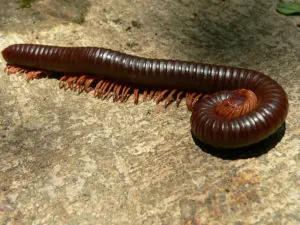
Millipedes are harmless, slow and mostly beneficial, breaking down leaf litter and mulch in the garden. They only become a pest when big numbers move toward the house, usually after heavy summer rain or at the start of a hot dry spell, and end up on stoeps, in garages and inside. The fix is a perimeter treatment combined with changes to the damp, leafy strip right next to your walls.
Why Waterkloof gardens produce so many
Millipedes eat decaying plant matter, and few suburbs have more of it than Waterkloof. Big jacarandas, oaks and other mature trees drop leaves and flowers year after year. Deep mulch beds, compost heaps, thick ground covers and shaded corners where leaves never dry out make perfect breeding ground. Gardens that are heavily irrigated through dry periods keep that layer moist all year.
When the summer storms arrive, the soil floods and millipedes move out and up, often in large numbers. Some head for higher ground, which means the house, the paving and the walls. After a long wet spell the ground can stay waterlogged, and the movement continues for days.
The two types you'll notice
- Large black or brown millipedes, the classic shongololo, slow and impressive, usually seen one or two at a time on paths and lawns.
- Smaller, thinner millipedes, often brown or grey, which are the ones that tend to invade in numbers, piling up under doors, in garages and along skirting boards.
Both curl into a coil when disturbed and can release a defensive fluid that stains skin and surfaces and smells unpleasant. They don't bite or sting.
How we deal with a millipede invasion
Perimeter barrier
We treat the foundation line, doorways, garage entrances, airbricks and paving edges with an odourless, non-staining residual product, creating a band millipedes have to cross to get in.
Garden edge
We treat the strip of beds and mulch closest to the house where they're gathering, rather than the whole garden. The millipedes further out are doing useful work.
Indoors
Where they've already come in, we treat the edges of affected rooms, garages and storerooms. Most of those inside will die off quickly because indoor air is too dry for them.
Advice
We'll point out the damp spots and leaf build-ups near the house that are drawing them in.
Garages, pool areas and outbuildings
On big stands, garages and pool houses often catch the worst of it, because doors are left open and the paving outside stays wet from irrigation or the pool. Millipedes collect under pool covers, stacked pots and boxes stored on the floor. Lifting stored items onto shelves, sweeping out the garage after rain and keeping the area around the pool pump dry all reduce the numbers that build up there. If there's a garden cottage, it usually needs the same perimeter treatment as the main house, since it often sits closer to the beds and trees.
The mistake to avoid
Spraying the whole garden. It's unnecessary, it kills a lot of beneficial soil life, and it doesn't stop the next group arriving from a neighbour's beds. Treat the house edge and change the conditions there; leave the rest of the garden alone.
It's also tempting to sweep a pile of millipedes into the flowerbed by the door. They'll be back inside by evening. Sweep them into a bucket and dispose of them away from the house.
A local tip
Every autumn, after the jacarandas and other big trees have shed, clear fallen leaves from the beds against the house walls and from gutters and downpipes. On Waterkloof stands, those leafy, damp strips are where most of the millipedes that end up indoors were living.
What does it cost?
The cost depends on the size of the house and perimeter, how much bed and paving edge needs treating, and whether outbuildings and garages need attention. Occasional millipedes on the stoep don't need any treatment. If they're coming indoors in numbers every time it rains, a perimeter treatment is well worth it, and we'll quote after looking.
For background on millipedes across the city, see millipede control in Pretoria. Damp gardens also bring centipedes, which do bite, so check out how we treat centipedes in Waterkloof. For the full mix of crawlers we deal with, read about crawling insects in Waterkloof homes, and for every pest in the suburb, the Waterkloof pest overview. We also handle millipede problems in Lynnwood nearby.
We've been treating Pretoria gardens and homes for 25 years and are registered with SAPCA. Our perimeter treatments come with a 3-month guarantee. Call 012 012 5526, or WhatsApp us a photo of what's coming in under the door.
Questions we get asked
Are millipedes harmful?
No. They don't bite or sting. They can release a fluid that stains skin and smells, so wash your hands if you touch one.
Why do millipedes come inside after rain?
Heavy rain floods the soil and leaf litter they live in, so they move to higher, drier ground, which is often your house and paving.
Will the millipedes inside the house die?
Most do within a day or two. Indoor air is too dry for them. Sweep them up and remove them rather than leaving them in corners.
Should I stop using mulch?
No, just keep it away from the walls. A dry strip of gravel or bare soil next to the house makes a big difference.
Do millipedes damage plants?
Occasionally they nibble seedlings or soft fruit lying on the ground, but they mostly eat decaying material and help break down leaf litter.