
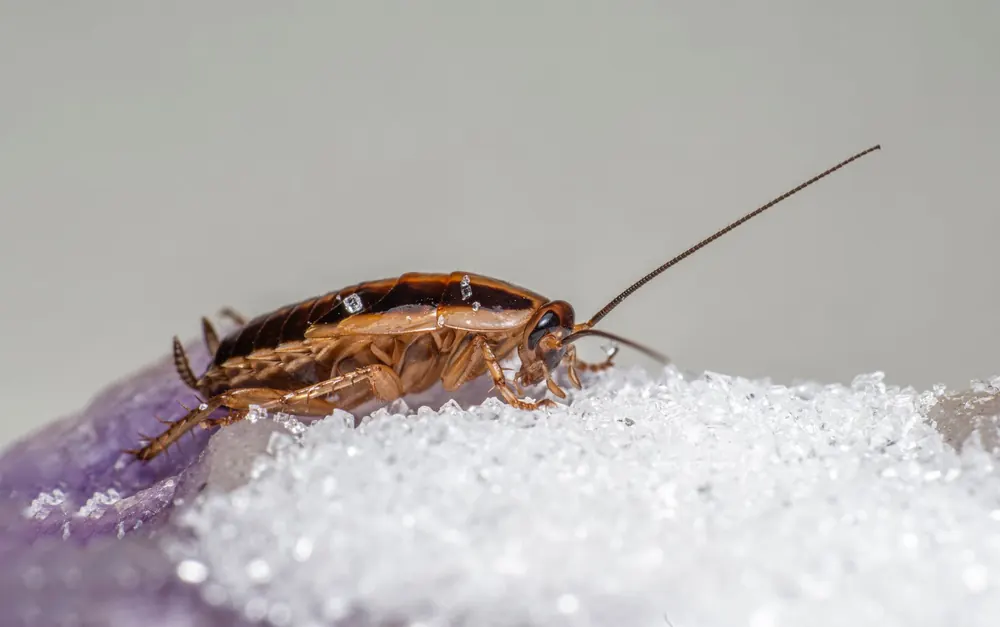
Small brown cockroaches darting behind the kettle at night, or a big reddish one climbing out of a floor drain: those are the two calls we get most from Waterkloof, and they need different answers. The small ones are German cockroaches living inside the kitchen. The big ones are American cockroaches coming up from the drains and outside. We treat both with targeted baits and sprays, and you don't have to empty the house.
Which cockroach have you got?
German cockroaches are small, light brown and fast, with two dark stripes behind the head. They live their whole lives indoors, in warm, tight spaces close to food: behind fridges and dishwashers, inside hinges, under the sink, in motor housings and in the gaps of built-in units. If you're seeing them in daylight, the population is already large.
American cockroaches are much bigger, reddish brown, and can fly short distances on hot nights. They breed in sewers, drains, manholes, compost and damp outbuildings, and wander in through floor drains, gaps under doors and open windows.
The Waterkloof factor
Larger homes here often have more than one cooking and washing area: a main kitchen, a scullery, a staff kitchen or a garden cottage with its own small kitchen, sometimes a bar or braai area. German cockroaches can establish in any of these, and if only the main kitchen is treated, they reinvade from the others. Residences that host functions also receive regular deliveries of crates, boxes and catering stock, which is one of the most common ways German cockroaches arrive in a home.
On the American side, older properties often have older drainage. Cracked pipes, loose drain covers and gullies that have dried out let them come straight up from the sewer line. Big gardens with compost and mulch beds give them plenty of places to live outside too.
Signs to look for
- Small dark droppings, like ground pepper, in drawer corners and hinges
- Brown egg cases behind appliances or under shelves
- A musty, oily smell in cupboards with heavy activity
- Cockroaches scattering when you switch the light on at night
- Large ones near floor drains, the scullery or the pool area after dark
How we treat them
German cockroaches: gel baits
We place gel bait in small spots exactly where they hide: hinges, appliance edges, the backs of units and inside cracks. Cockroaches feed on it and carry it back to others in the harbourage. There's no smell, nothing to wipe off counters and no need to empty every cupboard. A follow-up visit catches the next generation hatching from egg cases.
American cockroaches: drains and perimeter
We treat drains, gullies, manholes and outside resting places with an odourless, non-staining residual spray, and show you where they're getting in.
The mistake we see most
Spraying a supermarket can over gel bait, or across the kitchen before we arrive. Sprays repel cockroaches, so they scatter deeper into walls and units and avoid the bait. If you've booked a gel treatment, put the can away. And keep any treated spots free of cleaning products, which also make bait less attractive.
A tip for older Waterkloof homes
Pour a bucket of water down floor drains in the scullery, laundry, staff bathroom and outside gullies every week or two, particularly in a dry winter. A dry trap leaves an open pipe to the sewer, and that's often all an American cockroach needs to get in.
What does cockroach control cost?
The price depends on the species, how many kitchens and units are involved, how heavy the infestation is and whether we need a follow-up. A light German cockroach problem in one kitchen is a modest job. A residence with several kitchens and outbuildings, or ongoing monitoring for a home that caters regularly, is quoted to fit. For the odd American cockroach wandering in once a summer, keeping drains wet and sealing door gaps may be all you need.
You'll find more on species and treatment on our Pretoria cockroach control page. Cockroaches often turn up alongside ants in the same kitchen, and our ant treatments in Waterkloof use a similar bait approach. If fishmoths are also appearing in cupboards, see fishmoth control for Waterkloof homes. For an overview of the suburb, visit pest control in Waterkloof, and next door we treat cockroaches in Brooklyn regularly.
We're SAPCA registered with 25 years behind us, and if cockroaches return within three months of treatment, we come back. Ring 012 012 5526, or WhatsApp us a photo of the cockroach so we can confirm the species before we arrive.
Questions we get asked
Do I need to empty my kitchen cupboards for a cockroach treatment?
Usually not for gel baiting. The bait is placed in small spots in hinges, cracks and behind appliances, so most cupboards can stay as they are.
Why are cockroaches coming up through my floor drain?
The water in the drain trap has probably dried out. That leaves an open path from the sewer, and American cockroaches use it.
Can cockroaches come in with deliveries?
Yes. German cockroaches and their egg cases often travel in cardboard boxes and crates, so unpack deliveries promptly and don't store the boxes.
How soon will I see results?
Activity usually drops noticeably within a week or two of gel baiting. A follow-up deals with cockroaches that hatch from egg cases afterwards.
Is cockroach gel bait safe around children and pets?
It's applied in tiny amounts in cracks and hidden spots that children and pets can't reach, which keeps exposure very low.
Do you treat staff kitchens and cottages too?
Yes, and we recommend it. Untreated kitchens elsewhere on the stand are a common reason cockroaches reappear in the main house.