
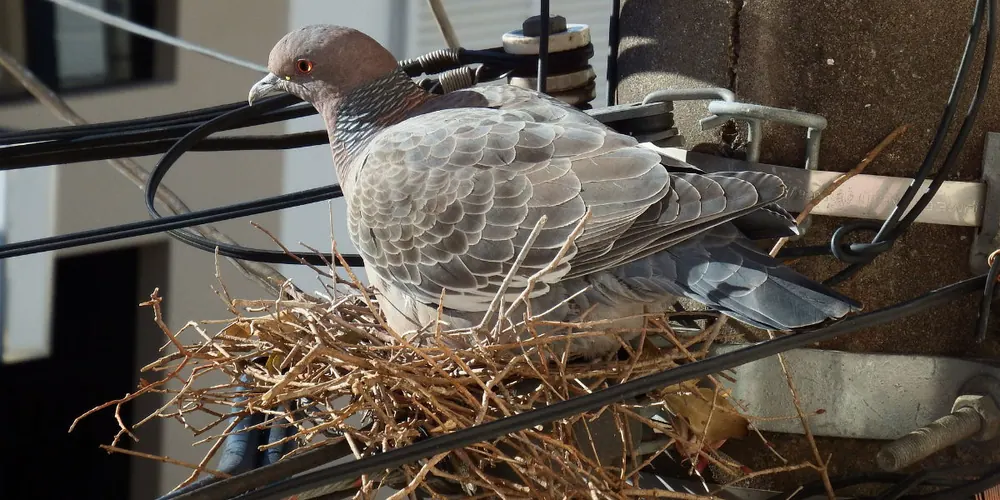
Bird mites live in birds' nests and feed on the chicks. When the chicks fledge or the nest is abandoned, the mites go looking for a new host, and in a house that often means the people sleeping in the room under the nest. They can't live on humans for long, but their bites are itchy and the crawling sensation is distressing. The fix is to find and treat the nest, then treat the rooms where the mites have spread.
Why Waterkloof roofs attract nesting birds
Waterkloof is full of birds, which is part of what makes it pleasant. Mature trees, big gardens and water features draw pigeons, mynas, sparrows, starlings and others, and older roofs give them nesting sites. Loose or broken tiles, gaps at the fascia, open eaves, gutters full of leaves, the space behind decorative mouldings and the top of a burglar-barred window all get used. Double-storey houses with complicated rooflines have many more of these gaps than a simple single-storey home.
Many owners don't even know there's a nest. It may be tucked into a corner of the roof void or behind a gutter, and it's only noticed when the mites start biting.
How to tell it's bird mites
- Bites at night, often on arms, neck and torso, that are very itchy
- A crawling or tickling feeling on the skin, especially in bed
- Tiny specks, smaller than a pinhead, moving on walls, ceilings, windowsills or white bedding
- Activity concentrated in one room or one side of the house
- A bird nest nearby that has recently gone quiet, or chicks that have just fledged
Bites alone aren't enough to be sure. Fleas and bed bugs cause similar complaints, so we look for the mites and the nest before treating.
Our treatment
- Find the nest. We check the roof void, eaves, gutters, tiles and window ledges above and around the affected room.
- Treat the nest site with a targeted nest treatment to kill the mites at the source. Where it's safe and appropriate, we advise on removing the old nest material once the birds have gone.
- Treat the affected rooms: skirting, window frames, ceiling edges, light fittings and around the bed, where mites have spread.
- Advise on proofing so birds can't nest in the same gap next season.
You don't need to leave the house for this. Keep children and pets out of treated rooms until the surfaces are dry.
Timing and seasons
Most bird mite calls in Waterkloof come in spring and early summer, which is when the birds in your roof are raising chicks. While the chicks are in the nest, the mites have all the food they need and you may notice nothing. The bites start a little while after the young birds fledge, or after a nest is abandoned or the adults are chased away. That delay confuses many people, because the nest seems empty and harmless by the time the problem appears. If you've recently noticed birds stop coming and going from a gap in the roof, mention it when you call; it's one of the most useful clues we can get.
The mistake that makes it worse
Pulling the nest out before the mites are treated. Disturbing an infested nest releases the mites, and they spread through the roof and into the house. Treat first, then remove. The other mistake is treating only the bedroom. If the nest stays, mites keep coming down from the ceiling.
A Waterkloof tip
Once a year, before the main breeding season in spring, have the roofline checked for broken tiles, open gaps at the eaves and leaf-filled gutters, and close them up. On older houses with mature trees nearby, this is the single best way to prevent bird mites, and it helps against roof rats too.
What does bird mite treatment cost?
The cost depends on how easy the nest is to reach, how many nest sites there are, how many rooms are affected and whether proofing work is needed afterwards. A single nest in an accessible gutter above one bedroom is a fairly quick job. Several nests in a complex roof on a double-storey house take longer.
For more about bird mites across the city, see our Pretoria bird mite page. Because the bites look similar, it's worth reading about bed bugs in Waterkloof homes and our wider biting insect treatments in Waterkloof. The full local list is on our Waterkloof pest page, and we also treat bird mites in Lynnwood.
We're SAPCA registered with 25 years of experience, and if the mites come back within three months, so do we. Call 012 012 5526, or WhatsApp us a photo of the specks or the nest site.
Questions we get asked
Can bird mites live on people?
No. They need birds to complete their life cycle. They bite people when their bird hosts leave, but they die out within a few weeks without birds.
Should I remove the bird nest myself?
Not before the mites are treated. Disturbing the nest releases mites into the roof and house. We treat the nest first.
How do I know it's bird mites and not bed bugs?
Bird mites are tiny, barely visible specks that move quickly on walls and ceilings, and there's usually a nest nearby. Bed bugs are larger, flat and brown, and hide in the bed itself.
Which birds cause bird mites?
Pigeons, mynas, sparrows and starlings nesting in roofs, gutters and eaves are the most common sources around Pretoria homes.
How quickly do the bites stop?
Usually within a few days of treating the nest and the rooms. The bites themselves can stay itchy for a while after.