
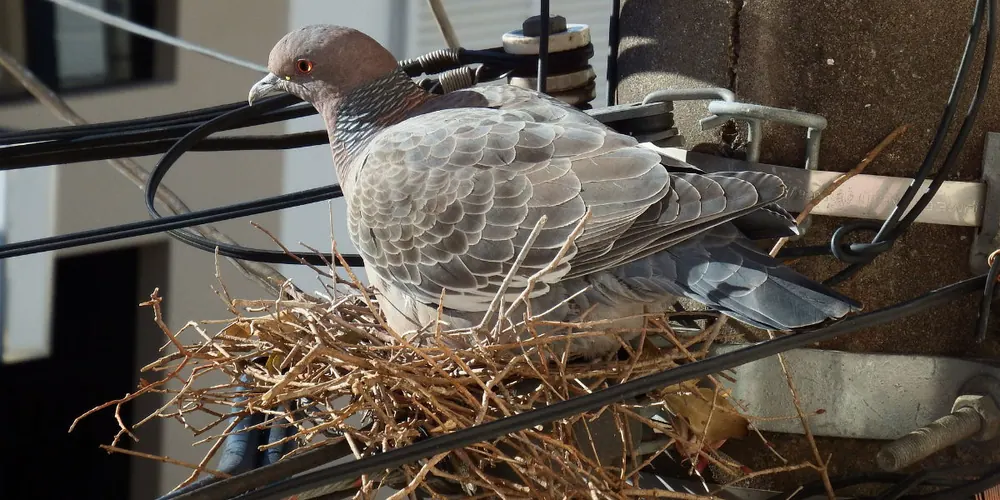
If you're being bitten at night in Lynnwood and seeing tiny, pinhead-sized specks moving on walls, ceilings or bedding, check the roof for a bird's nest. Bird mites live on nesting birds, and when the chicks fledge or the nest is abandoned, the hungry mites come looking for a new host, often into the bedroom below. The fix is a targeted treatment of the nest area and the rooms where the mites have spread, then removing the nest and closing the gap the birds used.
Why bird mites show up in Lynnwood
With its tall, old trees and older houses, Lynnwood is a suburb full of birds. Pigeons, mynas, sparrows and starlings all nest in roofs, gutters, under loose roof tiles, behind fascia boards, in the gaps under eaves and in air-conditioning units. Older roofs with gaps around the edges give them plenty of options. Most of the time, nobody notices the nest until something goes wrong.
Bird mites feed on the birds' blood and breed fast in a nest full of chicks. Once the young birds leave, or if a nest fails, thousands of mites are left without food. They wander out of the nest, through gaps in ceilings, around light fittings and air vents, and into rooms. They can't live on people for long, but they bite, and the bites itch intensely.
Signs it's bird mites
- Itchy bites, often at night, without any visible insect in the bed
- Tiny moving specks, smaller than a pinhead, on walls, ceilings, window sills or bedding, often near a light fitting or cornice
- Activity concentrated in the room under where a nest is, or near an air vent or downlight
- Birds seen going in and out of the roof, gutter or eaves, especially in spring and early summer
- Bites that started shortly after you noticed the chicks had gone quiet
Bird mites are often mistaken for bed bugs. Bed bugs are much bigger, about the size of an apple pip, and they leave dark spots on mattress seams. If that's what you're finding, read about bed bug treatment in Lynnwood.
How we treat bird mites
We start by finding the nest, which usually means going into the roof space and checking gutters, eaves and fascias near the room with the activity. The nest area is treated directly, then the nest is removed once the birds have gone. Inside, we treat the affected rooms with a residual product, focusing on the routes the mites use: cornices, ceiling edges, light fittings, window frames, skirting and around air vents. We then advise you on closing the gaps so birds can't nest in the same spot next season. You can stay at home. Keep children and pets off treated surfaces until they're dry.
What people get wrong
Removing the nest without treating it. Pulling an active nest out of the roof scatters the mites throughout the roof space and into the rooms below, and the problem can get worse before it gets better. The other common error is assuming it's bed bugs, then treating the mattress over and over while the real source sits in the gutter above the bedroom window.
A Lynnwood tip
In late winter, before the main nesting season, have a look along your roofline from the garden. Gaps under the eaves, broken tiles, loose fascia boards and gaps at the end of a gutter are where pigeons and mynas get in. Mesh or close those gaps before the birds start nesting, and you prevent the mite problem altogether. Trim back branches that give birds a sheltered approach to the roof, too.
Looking after the bites
Bird mite bites can itch for days. Washing bedding on a hot cycle, showering after you've been in the affected room and vacuuming the floors and edges of the room all help while the treatment takes effect. If the itching is severe, or bites look infected, see a pharmacist or doctor. Once the nest is gone and the rooms are treated, new bites should taper off fairly quickly.
What does it cost?
The cost depends on how many nests there are, how easy they are to reach, and how many rooms the mites have spread into. A single nest above one bedroom is a fairly small job. Several nests along a long roofline, or mites spread through several rooms, take more time. Bird proofing is a separate job and depends on the roof.
For more about bird mites across the city, see bird mite control in Pretoria. Homes along the reserve in the next suburb see plenty too, covered under bird mites in Faerie Glen. Other pests in your suburb are on the Lynnwood pest control page.
We're SAPCA registered with 25 years behind us, and if mites return within three months of our treatment, we'll come back. Call 012 012 5526, or WhatsApp us a photo of the specks or the nest and we'll help you work out what's biting.
Questions we get asked
Can bird mites live on people?
Not for long. They need birds to breed, so they bite people but can't establish themselves on humans. Removing the source ends the problem.
How do I know it's bird mites and not bed bugs?
Bird mites are tiny moving specks, often near ceilings and light fittings. Bed bugs are much bigger, flat and brown, and they hide in mattress seams.
Should I just remove the nest from the roof?
Not before it's treated. Removing an untreated nest scatters the mites through the roof and into the house.
When do bird mite problems usually happen?
Mostly in spring and early summer, when birds are nesting and the chicks leave the nest.
Will bird mites come back next year?
Only if birds nest in the same place again. Closing the gaps under eaves and at the gutters prevents that.