
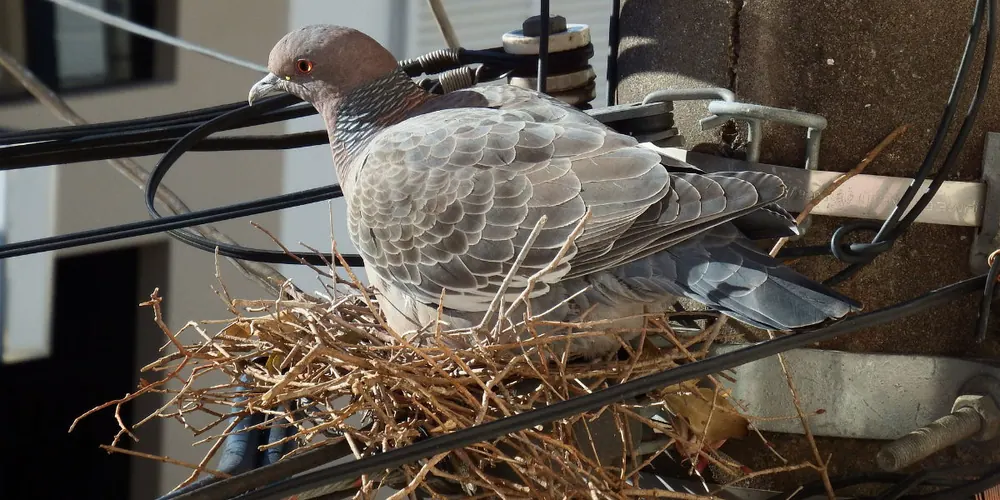
Bird mites are a problem that starts with a nest. Birds such as pigeons, sparrows, mynas and starlings build in roof spaces, under tiles, in gutters and behind fascia boards, and their nests carry mites that feed on the chicks. When the chicks fledge or the nest is abandoned, the mites lose their host, go looking for another, and wander down through ceiling gaps, light fittings and air vents into the house. They bite people, but they can't live on us, so the bites stop once the source is treated. That's the job: deal with the nest, treat the rooms where the mites are, and close the way in.
How to tell it might be bird mites
Bird mites are very small, about the size of a full stop, and often pale or reddish once they've fed. You might see:
- Tiny moving specks on the ceiling, walls, windowsills or bedding, usually near a light fitting, a ceiling vent or a window
- Itchy bites, often at night or in the early morning, sometimes in rooms directly under a nest
- Birds coming and going at one corner of the roof in recent weeks, which then went quiet
- Bird droppings and nesting material under the eaves or in the gutter
The timing is the strongest clue. Bird mite problems usually follow a few weeks after chicks fledge, typically in spring and summer.
Why this happens in Garsfontein
A lot of freestanding homes in the suburb have tiled roofs with gaps under the ridge tiles or at the edge where the tiles meet the fascia, and some have openings at the eaves that birds can use. Mature trees around family homes support a lot of bird life, and roofs become an easy nesting spot. In complexes, birds sometimes nest in the gap between the roof and a shared wall, which can affect two units at once.
What we do
- Find the nest. We check the roof space, eaves, gutters and the outside of the roof to find where the birds have been nesting. Often the clue is a pile of nesting material or droppings.
- Treat the nest area. Targeted treatment is applied to the nest site and the surrounding roof timbers to kill the mites at their source. Where the old nest can be safely reached, removing it is part of the job.
- Treat the affected rooms. We treat ceiling fittings, cornices, window frames, skirting and the areas around beds and couches where mites have been seen.
- Close the entry. Once the birds have gone, the gap they used should be sealed with bird netting, mesh or a roofer's fix, so the cycle doesn't repeat next season.
Keep the family and pets out of treated rooms until surfaces are dry. You can sleep in them that night.
Don't remove an active nest yourself
If there are still chicks in the nest, it's better to wait until they've fledged before dealing with it, and to tell us so we can plan the treatment. Pulling out an active nest can also release a large number of mites at once. Avoid handling nesting material with bare hands, and don't sweep it off the ceiling boards into the living area.
A mistake many people make
Treating the bites as bed bugs or fleas. People spray the mattress, wash the bedding and even throw out furniture, and the bites continue because the source is in the roof. If the bites started shortly after birds were nesting nearby, start with the roof.
A tip for the start of spring
Before nesting season, have a look along the roofline from the garden and check under the eaves for gaps where birds could get in. Fitting bird mesh or closing those gaps in winter, while nests are empty, is much simpler than dealing with mites in December.
What does bird mite treatment cost?
The price depends on how difficult the nest is to reach, the size of the roof space, how many rooms are affected and whether nest removal is needed. A single, accessible nest above one bedroom is straightforward. Several nests on a double-storey house, or a problem spread across a complex, takes more time. Sealing roof gaps afterwards may need a roofer, and we'll let you know if that's the case.
If you're unsure whether the bites are from mites, see our guide to biting insects in Garsfontein, or compare with bed bug treatment in Garsfontein. For more on the service across the city, visit bird mite control in Pretoria. We also deal with bird mites in older roofs in Waterkloof, and our other Garsfontein services are on the area page.
If the mites come back within three months of treatment, we'll come back. To book, ring 012 012 5526. A WhatsApp photo of the nest or the specks on the ceiling is a big help.
Questions we get asked
Can bird mites live on people?
No. They bite people but can't complete their life cycle on us. Once the nest source is treated, the bites stop.
How long do bird mites survive without birds?
Usually only a few weeks. That's why they move into the house looking for a new host after the chicks leave the nest.
Should I remove the bird nest myself?
It's best not to. Wait until the chicks have fledged, and have the nest treated before it's removed so mites aren't scattered into the house.
Why are the mites in my bedroom?
They come down through ceiling gaps, light fittings and vents from a nest in the roof space above. Bedrooms under the nest are usually worst affected.
Will bird mites affect my pets?
They can bite pets too, but like with people, they don't establish themselves on dogs or cats. Treating the source deals with it.
How do I stop birds nesting in my roof again?
Close the gaps they use with bird mesh, netting or roofing repairs once the nest is empty, ideally before the next spring.