
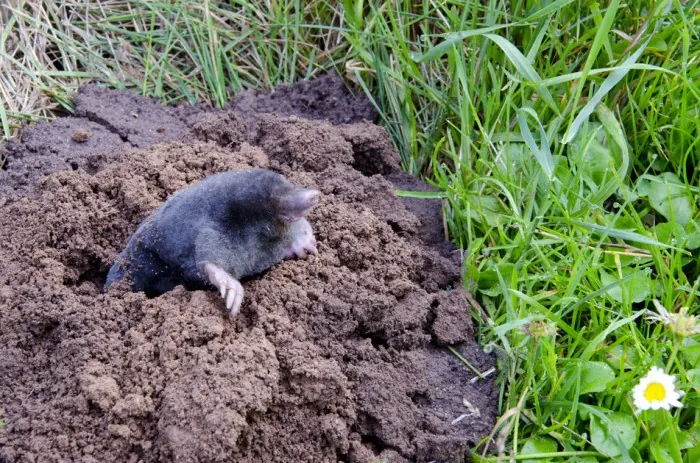
If your Lynnwood lawn has raised ridges that sink when you step on them, or small heaps of loose soil appearing overnight, you most likely have a golden mole. The answer is to find which runs are active and treat those directly, and to understand why your garden is attracting moles in the first place. Flattening the ridges with a roller every weekend won't get you anywhere.
Why moles like Lynnwood gardens
Golden moles are small, blind insect-eaters that swim through loose topsoil hunting earthworms, beetle grubs and other soil insects. They aren't rodents and they don't eat your plant roots, but their tunnels lift the lawn, dry out the grass above them and break up flowerbeds.
Lynnwood's big, established gardens give them everything. Decades of compost and leaf fall have made the soil rich. Irrigation keeps it soft and moist through the dry season, while lawns elsewhere go hard. Shade from mature trees keeps beds damp. That combination supports a lot of soil life, and moles follow the food. Gardens next to each other often share the same moles, which move along boundary walls and under hedges.
Is it moles, termites or something else?
- Moles: raised, winding ridges just under the surface; soft, spongy patches; small mounds of crumbly soil. Most active after watering or rain.
- Harvester termites: bare, flat patches with many tiny holes and loose soil around them, plus short cut grass pieces. Worse in dry weather. Our Lynnwood termite treatments deal with these.
- Lawn grubs alone: yellow, dying patches where the grass lifts like a carpet, without ridges.
It matters because the treatments are completely different, and treating the lawn for the wrong problem wastes time and money.
How we deal with moles
We walk the lawn and beds to map the tunnel system and work out which runs are in use. Moles abandon old tunnels and create new ones constantly, so treating every ridge in sight isn't the point. We treat the active runs directly, with minimal disturbance to your lawn, and come back to check whether new activity has appeared. Where the garden has a heavy grub population, we'll talk to you about that too, because reducing the food supply makes the lawn less attractive to the next mole.
What people often get wrong
Flooding the tunnels with the hosepipe is a classic. It softens the soil even more and brings worms closer to the surface, which is exactly what moles want. Another is buying windmills, vibrating stakes or smelly home remedies. Moles may shift a few metres away for a few days, but they don't leave a garden full of food. The third: assuming the damage will stop in winter. In watered Lynnwood lawns, it often doesn't.
A local tip for irrigated gardens
Look at your irrigation schedule. Many Lynnwood gardens run sprinklers little and often, which keeps the top few centimetres permanently soft and pulls worms and grubs up to where moles hunt. Watering less often but more deeply encourages deeper roots and a firmer surface layer, and it makes life a little harder for moles. It won't solve an active problem, but it helps a treated lawn stay that way.
What to expect after treatment
Don't be alarmed if you see a fresh ridge or two in the days after we've been. Old tunnels collapse, and sometimes a mole that was already on its way in from next door turns up. What matters is whether the new activity carries on. We check the runs again on the follow-up, and if another mole has moved in, we treat that too. Once the lawn has been quiet for a while, press the old ridges down gently with your foot or a light roller, top-dress the worst hollows with a little sifted soil, and let the grass grow over. Keep an eye out in autumn, which is when moles tend to be busiest in irrigated Lynnwood gardens.
What does it cost?
Mole control is priced on the size of the area, how widespread the tunnels are, and how many follow-up visits it takes. A single section of lawn with one active run is a small job. A big Lynnwood garden with ridges through the lawn and beds, or several neighbours with the same problem, is more involved. If neighbours treat at the same time, results last longer, because moles don't respect boundary walls.
For more about moles across the city, see mole control in Pretoria. We also deal with the big older gardens on the ridge next door through mole control in Waterkloof. For the other pests that turn up in Lynnwood gardens, have a look at our Lynnwood pest page.
We're SAPCA registered with 25 years of experience, and our 3-month guarantee means that if the treated activity comes back in that time, we come back too. Call 012 012 5526, or WhatsApp us a photo of the lawn damage and we'll tell you whether it's moles.
Questions we get asked
Do moles eat plant roots?
No. Golden moles eat earthworms, grubs and soil insects. The damage comes from their tunnelling, which lifts and dries out the lawn.
Why are the mole ridges worse after I water?
Water softens the soil and draws worms and grubs closer to the surface, so moles move up and tunnel more after irrigation or rain.
Can I get rid of moles by flooding the tunnels?
No. It usually makes the soil easier to dig and brings food closer to the surface, so the mole stays.
Is the mole coming from my neighbour's garden?
Often, yes. Moles move freely under walls and hedges, which is why treating neighbouring gardens together gives better results.
How long before the lawn recovers?
Once the activity stops, flatten the ridges gently and keep watering normally. Kikuyu usually knits back over the damage during the growing season.