
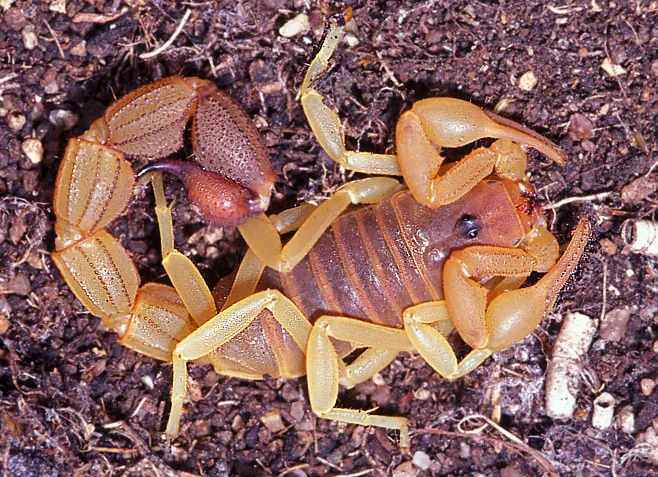
Scorpions do turn up in Lynnwood, usually in gardens with rockeries, stone retaining walls, stacked bricks or long-standing wood piles, and now and then indoors on a warm summer night. The way to reduce them is to treat the specific places they shelter and the entry points into the house, and to take away the cover and the insects they feed on. A general spray over the lawn achieves very little.
The honest local picture
Compared with homes on rocky slopes and koppies, most of Lynnwood is fairly flat, gardened ground, so scorpions aren't an everyday sight for most residents. But they don't need a mountain. A big, established Lynnwood garden can easily have all the shelter a scorpion wants: a decorative rockery, a dry-packed stone wall, a pile of offcut timber behind the garage, stacked paving left over from a renovation, loose bark around the pool pump. Add the crickets, beetles and cockroaches that live in that kind of cover and a scorpion has a home and a food supply.
They're most active on warm summer evenings, especially after rain, which is also when they're most likely to wander indoors through a gap under a door or into a shoe left on the patio.
Which scorpion is it? A useful rule of thumb
Look at the tail and the pincers. Scorpions with a thick tail and small, slender pincers rely on venom and are the ones to treat with real caution. Those with big, chunky pincers and a thin tail rely on their claws and are generally far less dangerous to people, although the sting still hurts. The burrowing scorpions most people find under stones and in the garden on the Highveld are usually the second type, but don't handle any of them, and get medical help if anyone, especially a child, is stung and feels unwell.
Where to look
- Under rocks, loose bricks and paving stones in rockeries and along paths
- In the gaps of dry-stone retaining walls and the base of boundary walls
- Inside wood piles, compost bays and stacked building materials
- In pool pump housings, meter boxes and garden sheds
- Indoors: in shoes, under towels on bathroom floors, behind doors and in garages
How we treat scorpions
We walk the property to find where scorpions are likely to be living, then treat those places directly with a residual product: rockery gaps, wall bases, the edges of paving, sheds, pump housings and the outside perimeter of the house, plus door thresholds, weep holes and gaps around pipes. Because scorpions follow their food, the same treatment cuts down the crickets and other insects that draw them in. We'll also point out what to move or seal. Indoors, a light treatment of the entry points is usually all that's needed. You don't need to leave the house; keep children and pets away from treated areas until they've dried.
What people get wrong
Stacking firewood or building rubble right against the house wall. It's convenient, but it creates the perfect scorpion shelter a few centimetres from your back door. The second mistake is assuming the treatment means you can stop being careful. Even after a treatment, shake out shoes and gardening gloves left outside overnight, and use gloves when moving rocks or bricks.
A tip for Lynnwood gardens
Look at your outside lights. A light over the back door or the patio draws insects on summer evenings, and scorpions come to the edges of that pool of light to hunt. Moving the light, or switching it off when you don't need it, means fewer insects at your door and fewer scorpions with them. A brush strip at the bottom of the door that opens onto the patio is cheap and stops most indoor visits.
What does it cost?
The cost depends on the size of the garden, how many rockeries, walls and outbuildings need treating, and whether we're treating mainly outside or inside as well. A single rockery and the back of the house is a modest job. A large Lynnwood stand with several stone features, a cottage and a pool area takes longer. If you've seen one scorpion in years, clearing the wood pile and sealing under the door may be all you need, and we'll say so.
Where there are scorpions, there are usually spiders, so read about spider treatments for Lynnwood homes too. On the rockier ground next door, scorpions are far more common, which is why scorpion control in Waterkloof gets its own attention. For the broader view, see scorpion control across Pretoria, and for every other local pest, our Lynnwood pest page.
We're SAPCA registered, with 25 years of experience, and if scorpions come back within three months of our treatment, we'll return. Call 012 012 5526, or WhatsApp us a clear photo of the scorpion so we can tell you what type it is.
Questions we get asked
Are scorpions common in Lynnwood?
Less common than on the rocky ridges, but they do turn up in gardens with rockeries, stone walls and wood piles, especially on warm summer evenings.
How can I tell if a scorpion is dangerous?
A thick tail with small pincers means it relies on venom and needs more caution. Big pincers with a thin tail usually means a less dangerous species. Don't handle either.
What should I do if someone is stung?
Keep calm, keep the person still and seek medical help, especially for children, the elderly or anyone who feels unwell. Take a photo of the scorpion if it's safe.
Why are scorpions coming into my house?
They follow insects and look for shelter, and come in through gaps under doors, weep holes and around pipes, mainly on warm nights.
Do I have to remove my rockery?
No. Treating it, keeping it free of loose debris and not stacking extra stones or timber around it is usually enough.