
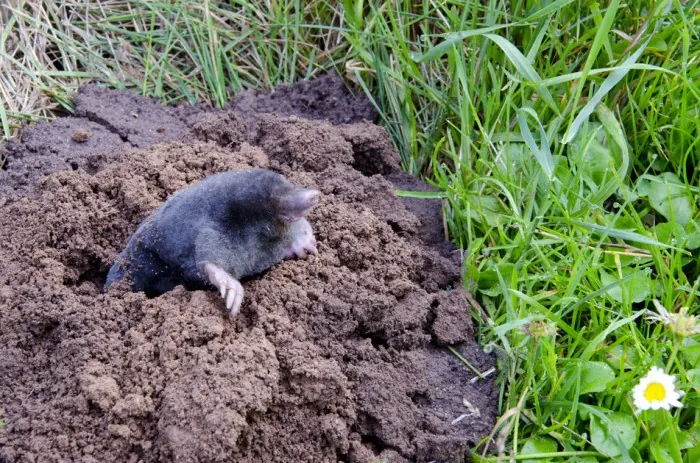
If you're seeing raised ridges running across the lawn and soil that sinks under your feet, a golden mole is almost certainly hunting through your garden. They're not rodents and they don't eat plants. They're after the grubs, worms and insects in moist soil, and a well-watered Centurion lawn is about the best hunting ground they could ask for.
Why Centurion gardens attract moles
Moles follow food and moisture. Estates and complexes across Centurion keep their lawns green right through the dry Highveld winter with irrigation, and that soft, damp soil is full of beetle larvae and earthworms. Many estates also border open grassland and green belts, so there's a steady supply of moles moving in from the edges. Older suburbs with large, established gardens see them too, especially where flowerbeds are heavily mulched and watered.
Activity tends to pick up after rain and in autumn, when the ground is soft and the grubs are near the surface.
Make sure it's a mole
Several things damage Centurion lawns, and they need different treatment:
- Golden mole: long, raised ridges just under the surface, with the grass lifted but not cut. Few or no mounds.
- Mole-rat: a rodent that eats roots and bulbs. It pushes up mounds of loose soil and can kill plants from below.
- Harvester termites: bare patches where grass has been cut away, with small holes and loose soil, and no ridges at all.
If what you have looks more like bare patches than tunnels, see our page on harvester and subterranean termites in Centurion instead.
How we deal with moles
We walk the garden to work out which runs are active and which are old. Moles reuse some tunnels and abandon others, and treating dead runs wastes time. A simple test is to press down a short section of each ridge and see which ones are raised again a day later. We then target the active runs, working so that the lawn isn't dug up, and return to check the results. Where neighbouring gardens on an estate share the same problem, it helps to treat them in the same period.
What people get wrong
The two big ones are flooding the tunnels with a hosepipe and pouring chemicals or petrol into the runs. Water just softens the soil further and makes it more attractive. Pouring fuel or household chemicals into the ground is dangerous, damages the lawn and does little to the mole, which simply opens a new tunnel. Windmills and vibrating stakes may move a mole a few metres for a while, but rarely for long.
A tip for irrigated estate lawns
Water less often but more deeply. Short daily irrigation cycles keep the top few centimetres permanently soft and pull grubs and worms right up to the surface, which is exactly where moles feed. Deeper watering every few days gives a healthier lawn and makes the surface less inviting. If your estate runs a shared irrigation system, it may be worth raising with management.
Timing matters
Mole damage tends to be at its worst in autumn, when Centurion gardens are still soft from summer rain and irrigation, and again after the first good storms in spring. Treating while the runs are active and fresh gives the best result. Once a mole has moved on, the old ridges stay but there's nothing to treat, and the lawn can simply be rolled and repaired. That's why we ask you to send a photo or call while you're seeing new ridges, rather than waiting until the garden has recovered.
Moles aren't all bad
It's worth saying: golden moles eat a lot of lawn grubs and other soil insects, and they help aerate the soil. On a large property with rough grass, one mole may not be worth worrying about. It's on sports surfaces, show lawns and small gardens where the damage is obvious that most people want them gone.
What does it cost?
Mole work is priced on the size of the garden, how many active runs there are, whether moles are coming in from a neighbouring green belt and how many follow-up visits are needed. A single run in a small complex garden is a quick job. A large estate lawn or a sports field takes more. If the damage is limited and the mole is on a bigger property, we may suggest leaving it.
Estate gardens often have ants nesting under the same lawns, which our Centurion ant control covers. For the city-wide view, see our mole service across Pretoria, or our work on moles in Waterkloof gardens, and the main Centurion pest page for everything else.
One Stop is SAPCA registered, and if the moles return to the treated area within three months, we're back under our guarantee. To get your lawn looked at, call us on 012 012 5526 or WhatsApp a photo of the ridges.
Questions we get asked
Do moles eat my plants?
No. Golden moles eat grubs, worms and insects. If plants and bulbs are dying from below, a mole-rat is the more likely culprit.
Why do the ridges appear overnight?
Moles are active at all hours and can tunnel a long way in a short time, especially in soft, freshly watered soil.
Will treating for moles harm my dogs?
We target the tunnels themselves rather than the open lawn. We'll tell you if there's any area pets should be kept off for a time.
Is a mole the same as a mole-rat?
No. A golden mole is an insect-eater that leaves ridges. A mole-rat is a rodent that eats roots and pushes up heaps of soil.
Will the mole come back after treatment?
A treated garden can be re-entered by a new mole from a neighbouring property or green belt, which is why coordinated treatment on estates helps.
Can you treat a school or sports field?
Yes. We treat larger grassed areas as well as home gardens, and plan the visits around when the field is in use.