
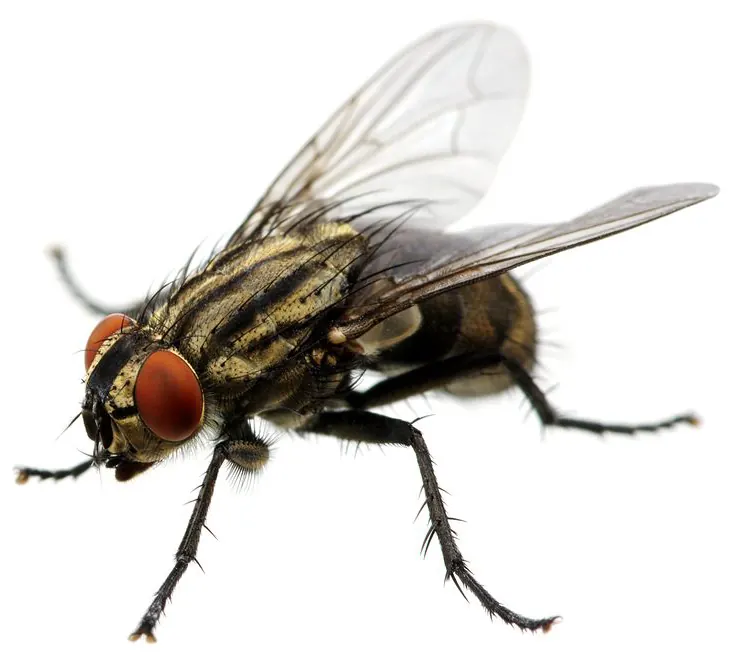
If flies are filling your kitchen, patio or entertainment area in summer, the cause is almost always a breeding site within a short distance of the house. Swatting and sticky strips catch the adults; they don't stop the next batch hatching. We find what the flies are breeding in, help you remove it, and treat the surfaces where they rest so the ones already around die off.
Where flies breed on a Waterkloof property
House flies and blowflies lay their eggs in moist, rotting organic matter. Large gardens and busy households produce a lot of it. The usual suspects we find here are:
- Compost heaps with kitchen scraps on top, especially meat or cooked food
- Dog runs and lawns where droppings aren't picked up daily, more so with several dogs
- Bin areas where wheelie bins aren't rinsed and bags split in the heat
- Grass clippings piled up wet in a corner of the garden
- Drains and gullies in sculleries and outside kitchens, where food waste collects
- Fallen fruit rotting under fig, peach or citrus trees
- Kitchens that cater, where residences prepare food for functions and waste builds up quickly
Small fruit flies and drain flies are a slightly different story. Fruit flies breed in overripe fruit, wine and juice residue and recycling. Drain flies, the small fuzzy ones on bathroom walls, breed in the slime inside drains and overflows, which is common in older plumbing.
Why summer is so bad
Highveld summers bring heat and afternoon storms, and that combination speeds up the fly life cycle dramatically. A compost heap or a bin that's harmless in winter can produce a steady stream of flies within days in January. Outdoor living adds to it: patios, braai areas and pool decks with food out for hours are exactly where flies gather.
How we bring fly numbers down
1. Find the source
We walk the property and look at compost, bins, dog areas, drains and any rotting material, and check the kitchen, scullery and staff areas.
2. Remove or fix it
Most of the long-term result comes from this step, and much of it is something you or your gardener can do once you know where to look. We'll tell you exactly what to change.
3. Treat resting areas
We apply an odourless, non-staining residual treatment to the surfaces flies land on: eaves, walls around bins and back doors, patio ceilings, window frames and fences near the source.
4. Drains
For drain flies, we deal with the build-up in the drain itself, which is where the larvae live.
5. Ongoing service
Residences, schools and offices with kitchens can have scheduled visits so fly numbers stay down through the season.
On stands with a garden cottage or staff quarters, we look at those bins and kitchens too, since a single overflowing bin behind an outbuilding can supply flies to the whole property.
The common mistake
Spending money on sprays and zappers indoors while the compost heap or the dog run outside keeps producing flies. You'll never catch up. Find and fix the breeding site first, then treat; the order matters.
A Waterkloof tip
If you keep a compost heap on a big stand, put kitchen scraps in the middle and cover them with a thick layer of dry leaves or garden waste every time. Leave out meat, bones and cooked food altogether. Exposed scraps on the surface are one of the biggest fly sources we find on established properties here, and the fix costs nothing.
What does fly control cost?
The main factors are how big the stand is, the number of breeding sources we find, whether drains need attention and whether you want a once-off treatment or regular visits through summer. Often the honest answer is that fixing the compost, bins and dog area will solve most of it, with one treatment to knock down the adults. A residence with a busy kitchen or outdoor functions might benefit from a seasonal plan.
Fly species and breeding habits are covered in more depth on our Pretoria fly control page. Flies are only one of the summer fliers; see flying insect control across Waterkloof for mosquitoes and moths, and wasp removal in Waterkloof if wasps are joining them around the braai. The Waterkloof pest control page lists everything else, and we also treat flies in Brooklyn, where many homes have become offices with kitchens.
One Stop Pest Control is SAPCA registered and has been treating pests for 25 years. Our treatments come with a 3-month guarantee. Call 012 012 5526, or WhatsApp a photo of the flies and the area they're gathering in.
Questions we get asked
Why are there so many flies at my house but not my neighbour's?
There's probably a breeding source on or right next to your property, such as compost, a bin area, dog droppings or rotting fruit. Flies rarely travel far from where they hatch.
What are the tiny flies on my bathroom wall?
Probably drain flies. They breed in the slime inside drains and overflows, so cleaning the drain itself is what gets rid of them.
Do fly zappers solve the problem?
They catch some adults, but they don't stop new flies hatching. Removing the breeding source is far more effective.
Can you treat before an outdoor event?
Yes. A treatment of resting areas a day or two before, combined with clearing bins and waste, reduces flies around patios and entertainment areas.
Are flies a health risk?
Yes. House flies and blowflies move between waste and food and can carry bacteria onto surfaces and food, which is why kitchens should be kept clear of them.
Why do flies get worse after rain?
Warm, wet conditions make compost, waste and droppings break down quickly and keep them moist, which is ideal for fly larvae.