
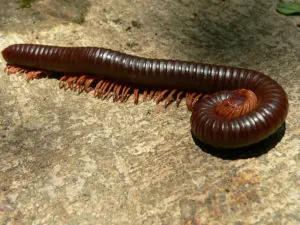
Millipedes are harmless, but when hundreds of them march into a Brooklyn house after a storm, they're a real nuisance. The fix is a barrier treatment around the outside of the house and the doorways, together with reducing the damp, leafy cover right next to the walls where they gather. Spraying the ones inside does very little.
Why Brooklyn gets millipede invasions
Millipedes feed on decaying plant matter: fallen leaves, rotting mulch, compost and soft old wood. A suburb full of mature trees produces a lot of that, and Brooklyn's established gardens often have years of leaf mould built up in beds and under hedges. Through most of the year the millipedes stay out of sight in that layer. When the summer rains arrive and the ground becomes waterlogged, they move up and out in large numbers, looking for drier ground or mates. Your walls, patios and doorways are in the way.
Older houses, with doors that no longer seal tightly at the bottom and gaps around old frames, let them straight in. Once inside they usually dry out and die within a day or two, which is why people often find them curled up and dead on the floor.
What you'll notice
- Dark brown or black, rounded, slow-moving creatures with many legs, often curling into a spiral when touched
- Large numbers on paving, patios and walls after rain, especially in the evening
- Dead, curled millipedes along skirting and under doors in the morning
- A faint, unpleasant smell or a brown stain on the skin if you handle one, which is their defence chemical
- Seedlings nibbled in beds that are thick with mulch
Our approach
The treatment happens outside. We apply an odourless, non-staining barrier treatment around the base of the walls, along doorways, patio edges and the borders of beds closest to the house, so millipedes heading for the building cross it before they reach the door. We check where they're coming from, whether it's a hedge line, a compost heap or a thick bed of leaves under a tree, and treat those edges too. Then we show you the gaps under doors and around frames that are letting them in.
Inside, there's usually no need to treat. Sweep up the dead ones and let the barrier do its work.
The common mistake
Adding more mulch. It's good for the garden, and plenty of Brooklyn gardeners do it every spring, but a thick layer of fresh mulch pushed right up against the house is a millipede nursery. Keep the mulch in the beds and leave a clear, dry strip along the walls.
Brooklyn-specific prevention
- Rake leaves away from the walls and the edges of paving before the rains start, not after.
- Keep compost heaps at the far end of the garden, not beside the kitchen door.
- Fit or replace door sweeps on older outside doors.
- Make sure gutters and downpipes drain away from the house so the soil against the walls dries quickly.
- Turn off outside lights near doors on rainy nights, as some millipedes are drawn to them.
Millipedes, centipedes and other crawlers
Millipedes are vegetarians and harmless to people. Centipedes, which hunt and can bite, look similar but are flat and fast. If you're not sure which you have, see our page on centipedes in Brooklyn. If millipedes are just one of several crawling pests getting in, a combined crawling insect treatment for Brooklyn is usually better value than tackling each on its own.
When does it stop?
Millipede invasions are seasonal. They tend to peak in the wetter months of summer, especially after the first heavy rains, and ease as the ground dries out in autumn. A barrier treatment early in the season, before the worst of the rain, gives the best results.
What does it cost?
The price depends mainly on the length of the perimeter to be treated, how many doorways and patios are involved and whether there are outbuildings. It's normally a single visit with a follow-up only if numbers stay high. If you're seeing a few millipedes now and then after rain, you probably don't need a treatment at all. Sweep them out and clear the leaf litter.
Our millipede control across Pretoria explains more, and the leafy gardens next door get similar help through our Waterkloof millipede service. You'll find the rest of our local work on our Brooklyn pest control page. One Stop Pest Control is SAPCA registered and has 25 years of experience. If millipedes come back in numbers within 3 months, we'll return and re-treat. Call 012 012 5526, or send us a photo on WhatsApp.
Questions we get asked
Are millipedes dangerous?
No. They don't bite or sting. Some release a smelly fluid that can stain skin, so wash your hands if you pick one up.
Why do millipedes come into the house after rain?
Heavy rain waterlogs the soil and leaf litter they live in, so they move in search of drier ground, which often means your doorways and floors.
Why are they all dead in the morning?
Indoors is too dry for them. Millipedes lose moisture quickly and usually die within a day or two of getting inside.
Do I need to treat inside the house?
Usually not. The barrier goes outside, around walls and doorways. Inside, just sweep up the dead ones.
When should I book a millipede treatment?
Early in the rainy season, ideally around the first heavy storms, when they're starting to move. The barrier then stops the bulk of them.
Do millipedes damage the garden?
Mostly they eat dead plant matter. In large numbers they can nibble seedlings and soft fruit lying on the ground.