
Most spiders around a Brooklyn home are harmless and even useful, because they eat flies, mosquitoes and moths. The ones worth treating are the species that bite, the ones in large numbers indoors, and webs that have taken over an entrance, a patio or an office reception. We treat the hiding places directly and deal with the insects that are feeding them.
The Brooklyn spider picture
Spiders follow food and shelter, and Brooklyn offers plenty of both. Big old trees and thick creepers on walls are full of insects and give web-builders anchor points everywhere. Older houses have deep eaves, verandas, pergolas and garages that collect webs in their corners. Outbuildings, old garden rooms used for storage and sheds are rarely disturbed, which suits hunting spiders that hide by day.
Outside lights matter as well. A porch light or a security light on a converted office attracts moths and flies all night, and spiders build webs right next to it to catch them.
The spiders people ask us about
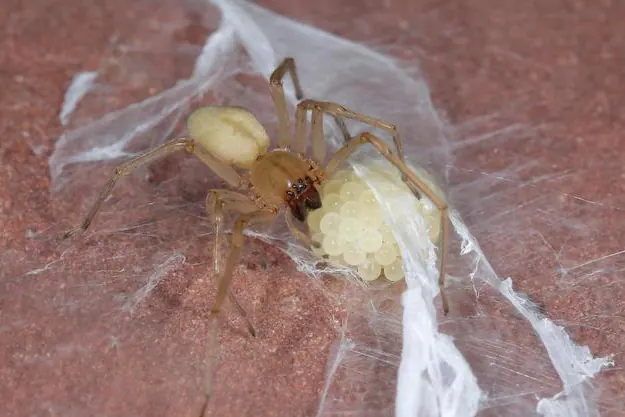
Sac spiders
Small, pale yellowish or greenish spiders that make little silk sacs in the corners of ceilings, behind curtains and in the folds of clothes. They hunt at night and are responsible for many of the spider bites people get in bed in South Africa. The bites can blister and are slow to heal.
Violin spiders
Brown spiders with long legs and a darker violin-shaped mark on the back. They hide in undisturbed, dark places such as storerooms, under furniture, and in boxes. Bites are uncommon but can cause a serious wound, so they're worth treating if you find them.
Web builders and rain spiders
Garden orb weavers, cobweb spiders and the large rain spiders that wander indoors before a storm look alarming but are not a danger. Rain spiders in particular are mostly a fright. They're often treated simply because people would rather not share the lounge with them.
Our approach
- Look at where they are and why. We check eaves, ceilings, behind furniture, storerooms, garages, outside lights and creepers.
- Treat the hiding places. We apply an odourless, non-staining residual spray to the cracks, corners, eaves and voids where spiders live, rather than spraying the open room.
- Remove webs and egg sacs in the areas treated.
- Deal with the food supply. If spiders are thriving because of flies or moths around lights, we'll suggest changes or treat the flying insects too.
Offices, practices and embassies
For a business in a converted Brooklyn house, spiders are as much about appearance as anything else. Visitors notice webs across the entrance, the reception window and the parking bay roof. We can include spider treatment of eaves, entrances and outside lighting in a scheduled service, so the building stays presentable through the summer when webs build up fastest. Treatments are done without a smell, so staff can carry on working.
The mistake we see most
Knocking down webs over and over without treating anything. It's satisfying, but in a house with creeper on the walls and an outside light, new webs are back within days. Treating the eaves and cutting back the plants that touch the house is what makes the difference.
A tip for Brooklyn properties
Change the bulbs on your outside lights to warm-coloured or yellow ones and point them away from doorways. They attract far fewer insects, which means fewer spiders around the front door. Cutting creeper back from window frames and the edge of the roof also helps, as it gives spiders and the insects they eat a direct path inside.
What does spider control cost?
The cost depends on the size of the property, how much of the outside needs treating, whether outbuildings and garages are included, and whether it's a one-off or part of a regular service for an office. A typical house with spiders in the eaves and a few indoors is a modest job. If you're seeing the odd rain spider before a storm, you don't need us. Catch it in a container and put it outside.
We treat spiders citywide through our Pretoria spider control service, and the ridge gardens nearby are covered under spider control in Waterkloof. Spiders and scorpions often share the same rockeries and wood piles, so read about scorpions in Brooklyn too. Everything else we handle locally is on our Brooklyn pest control page. We're SAPCA registered and have 25 years of experience, and if spiders return in numbers within 3 months, we'll come back. Phone 012 012 5526, or WhatsApp us a photo of the spider and we'll identify it.
Questions we get asked
Are spiders in Brooklyn dangerous?
Most are harmless. Sac spiders and violin spiders can give bites that need medical attention, so those are the ones worth treating if you find them.
What should I do if I'm bitten by a spider?
Clean the bite and see a doctor if it blisters, spreads or doesn't heal. If you can, keep the spider in a jar so it can be identified.
Why do I get so many spiders around my front door?
Usually because of an outside light. It attracts insects at night, and spiders build webs nearby to catch them.
Are rain spiders poisonous?
They're venomous like most spiders, but they're not considered dangerous to people. They're large and fast, which is why they scare people.
Do you spray the whole house for spiders?
No. We treat the specific cracks, corners, eaves and voids where spiders hide, which works better and uses less product.
Will spiders come back after treatment?
Some will, especially outdoors in a garden full of trees. Treating hiding places and reducing the insects they feed on keeps numbers down.