
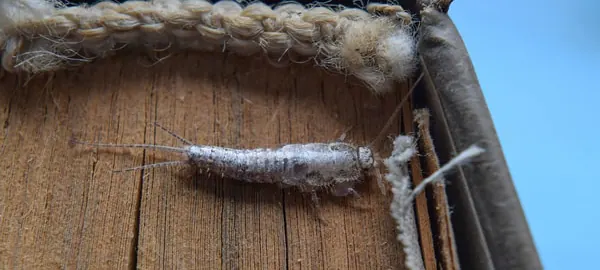
Fishmoths in a Montana home are dealt with by treating the cracks and voids where they hide with an odourless residual product, and at the same time removing what they feed on and drying out the spaces they prefer. They're harmless to people but slowly damage paper, photos, books, wallpaper and natural fabrics, and they can be surprisingly persistent once settled in.
What fishmoths are and what they eat
Fishmoths, also called silverfish, are small, wingless, carrot-shaped insects with a silvery, scaly body and three tail bristles. They move quickly and hide during the day. They eat starches and sugars: the glue in book bindings and cardboard boxes, paper, wallpaper paste, photographs, linen, cotton and stored dry foods like flour and cereal. They need moisture and darkness, which is why they're found in specific spots rather than throughout the house.
Why Montana homes get them
A lot of Montana households moved in relatively recently, and moving brings cardboard boxes. Boxes are both food and shelter for fishmoths, and many arrive with a few already inside. In newer homes, boxes that never quite got unpacked often end up stacked in the garage, the storeroom or the top of a built-in cupboard. That's an ideal fishmoth colony site: dark, undisturbed, and full of glue and paper.
The other factor is moisture. In the hot, humid summer months, closed rooms, en-suite bathrooms without good ventilation, and cupboards against an exterior wall can stay damp, especially in newer complexes where units are compact and windows are small. Garden-facing walls that get splashed by irrigation can also keep a cupboard behind them damp enough.
Where to look
- Inside cardboard boxes in the garage or storeroom
- Behind and under bookshelves, and inside old books
- Built-in cupboards, especially high shelves that are rarely opened
- Under bathroom sinks and around the bath panel
- Behind skirting boards and along the edges of carpets
- Roof spaces with stored items and loose insulation
Signs include small, irregular holes in paper or fabric, yellowish stains, scraped surfaces on photographs, and tiny pepper-like droppings.
How we treat fishmoths
We inspect the house to find where they're concentrated, then apply an odourless, non-staining residual treatment to the cracks, voids, cupboard edges, skirting and storage areas where they shelter. In roof spaces and storerooms with a lot of stored goods, we may use a dust formulation that reaches deep into gaps. We'll also point out moisture sources and storage habits that need to change. Nobody has to move out for this. The only precaution is to wait for treated cupboard shelves and skirting to dry before the kids or the cat go near them.
Homes, complexes and offices
In complexes, fishmoths are usually a unit-by-unit problem rather than a block-wide one, because they spread mainly in stored goods rather than through walls. That makes them easier to clear than cockroaches. Offices, schools and small businesses with archive rooms, filing cabinets and stores of paper stock can carry large populations without anyone noticing until records start getting damaged. For those sites, a scheduled visit to the storage areas a few times a year is often the sensible option.
What people get wrong
Putting naphthalene balls or cedar blocks in the cupboard and stopping there. These may keep fishmoths away from a single drawer for a while, but they don't touch the population living in the boxes in the garage or behind the skirting. The other mistake is treating the house while leaving damp, cluttered storage exactly as it was. The fishmoths will come back to those spaces first.
A Montana tip
If you still have moving boxes stacked in the garage, it's worth spending an afternoon unpacking them and moving what you want to keep into sealed plastic containers. It's the single most effective thing you can do for fishmoths in a newer home. Also keep important documents and photographs in plastic sleeves, not cardboard files.
What does fishmoth treatment cost?
What you pay mostly reflects the amount of storage space to treat, the size of the house and whether the roof void or garage is part of the job. A small infestation limited to one bathroom cupboard is a small job. A garage and storeroom full of boxes, or a home where fishmoths have spread through several cupboards, takes more. In a mild case, clearing out the boxes and fixing ventilation can be enough on its own, and we'll tell you if we think so.
Other pests we treat in the suburb are listed on our Montana pest services page. Fishmoths often share hiding spots with cockroaches, so see cockroach control in Montana if you've seen both. If they've moved into your pantry, our stored product pest service for Montana covers flour and cereal pests. We also treat fishmoths in Lynnwood, and the citywide service is described under fishmoth control in Pretoria.
Our team has a quarter of a century in the trade and is SAPCA registered. If fishmoths come back within three months of treatment, so do we, at no extra cost. Call 012 012 5526, or WhatsApp us a photo of the insect and we'll confirm what it is.
Questions we get asked
Are fishmoths dangerous?
No. They don't bite or carry disease. The harm is to paper, books, photographs, wallpaper and some fabrics.
Why do I see fishmoths in the bath?
They fall in while looking for moisture at night and can't climb the smooth sides. It usually means they're living nearby, under the sink or behind the bath panel.
Can fishmoths come in with moving boxes?
Yes. Cardboard boxes are one of the most common ways they arrive in a new home.
Will a dehumidifier help?
It can, in a damp room or storeroom. Fishmoths need humidity, so drier air makes the space far less suitable.
How long until they're gone?
Numbers usually drop over the first few weeks as they come into contact with the treated areas, provided their food and damp hiding spots are also dealt with.