
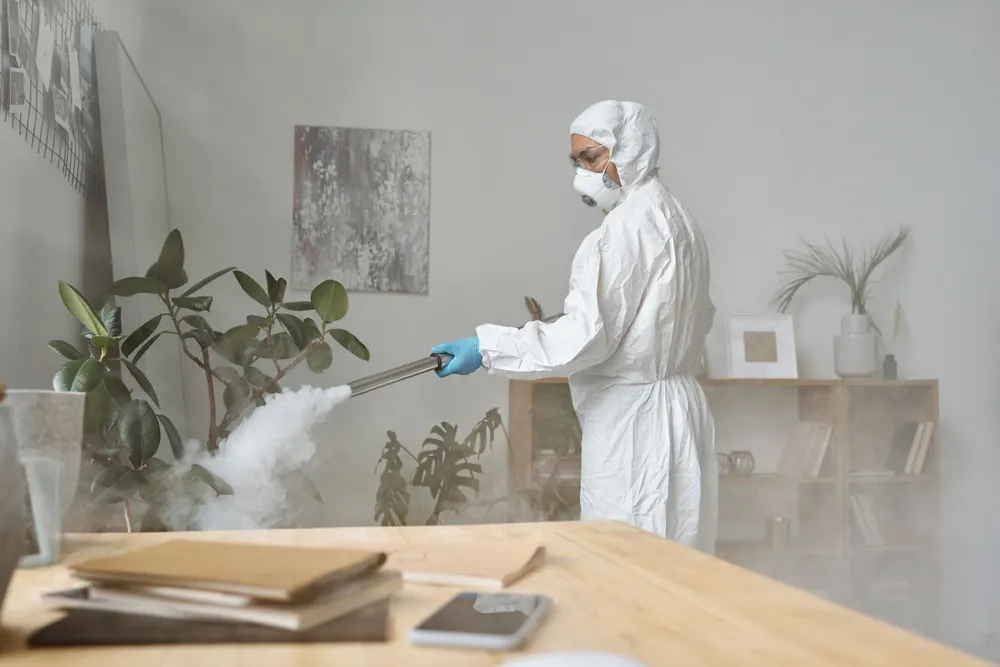
If something is living in your house, garden or business that shouldn't be, the quickest route to getting rid of it is to identify it correctly and find out why it chose your property. That's how every job we do starts. One Stop Pest Control has been treating homes, security estates, complexes, offices, schools, restaurants and warehouses across Pretoria and Centurion for 25 years, and most of what we know comes from watching the same pests return to the same kinds of places, season after season.
Start with what you're seeing
People rarely phone us with the name of a pest. They phone with a clue. Here's what the common ones usually mean:
- Scratching above the ceiling at night: almost always rats, sometimes mice. See our rodent control for Pretoria properties.
- Thin mud tunnels up a wall or bare, sandy patches in the lawn: termites, and the two signs point to two different species.
- Small brown insects that scatter when the kitchen light goes on: German cockroaches, the ones that breed behind fridges and inside appliances.
- A line of ants from the paving to the sugar bowl: foragers from a nest outside, usually just before rain.
- Itchy bites in rows after a night's sleep: possibly bed bugs, possibly fleas. The pattern and the place tell us which.
- Raised ridges and soft soil across the lawn: moles hunting under the surface.
- Silver, fast-moving insects in the bathroom or a box of old papers: fishmoths.
If you can't tell, take a photo and WhatsApp it to us. A clear picture of the insect, the droppings or the damage often tells us more than a description.
How the Highveld year shapes pest problems
Pretoria's climate does a lot of the work for the pests. The city sits high, with hot, stormy summers and dry winters that bring cold nights and frost in the low-lying parts. That rhythm makes many problems fairly predictable.
Spring and early summer
The first heavy thunderstorms trigger termite swarms: thousands of winged termites pouring out of the ground and circling the outside lights. Ants move indoors ahead of rain, and paper wasps start building under eaves and patio roofs.
Midsummer
Flies and mosquitoes peak, cockroaches breed fastest in the heat, and spiders and scorpions are active around rockeries, retaining walls and wood piles. Properties on the ridges and koppies, from the Magaliesberg side of the city to the rocky slopes of the east, see more of these.
Autumn and winter
Once the nights turn cold, rats and mice move into roofs, garages and wall cavities. Outside, harvester termites take advantage of the dry months to strip kikuyu lawns. It's also the season when we hear most about fleas in carpets, because pets spend more time indoors.
What happens when we visit
We inspect before we treat. That means looking at how the pest is getting in, where it's sheltering, and what is feeding or watering it, whether that's a gap under the garage door, a leaking geyser overflow, an open compost heap or a pantry that's never been fully cleared. Then we choose a treatment to fit the pest:
- Lockable, tamper-resistant bait stations and traps for rats and mice, with advice on proofing the gaps.
- Gel baits for cockroaches, placed where they hide rather than sprayed across open surfaces.
- Ant baits the workers carry back to the nest.
- Registered soil treatments and baiting for termites in buildings, and targeted treatment of harvester termite activity in lawns. Our full approach is on the page for termite control in Pretoria.
- Odourless, non-staining residual sprays and barrier treatments for crawling insects, and targeted nest treatment for wasps and bird mites.
- Fumigation with registered fumigants, only where a job genuinely needs it.
For ordinary insect treatments you don't need to move out. Keep children and pets off treated surfaces until they're dry. Gas fumigation is different: the sealed area has to be empty until it has been cleared. If you'd like to understand how we keep chemical use down, read about eco-friendly pest control in Pretoria.
Homes, estates and businesses need different plans
Freestanding homes usually need a one-off treatment plus a few changes to the garden or the house. Complexes and security estates are different, because roof voids, walls and gardens are shared. Treating one unit for cockroaches or rats while the neighbours do nothing often just moves the problem next door, so we prefer to work with the body corporate or estate manager on a block or whole-site plan. That applies as much in Pretoria East as it does in the big estates of Centurion.
Businesses such as restaurants, food factories, warehouses, schools and offices are better served by a scheduled monitoring contract: regular visits, bait stations that are checked and recorded, and early warning before a few pests become an infestation. If you prepare or store food, that record also helps when an inspector or client asks how you control pests.
The mistake that costs people the most
Buying a spray, treating what you can see, and waiting. For some pests that's fine. For others, the ones that live out of sight, it's money spent on the wrong target. Spraying cockroaches pushes them deeper into the walls and appliances. Spraying an ant trail kills the scouts and leaves the queen untouched. Breaking open termite tubes destroys the trail we'd use to find the colony. If what you're seeing keeps coming back after a week or two, the source hasn't been dealt with.
A simple local habit that helps
Before the first summer storms, walk around the outside of your house with a torch one evening. Look for gaps under doors, open air bricks, cracks where the paving meets the wall, and gutters full of leaves. That one walk-around covers the main entry points for rodents, ants, cockroaches and termites before their busy season starts.
What does pest control cost?
There's no single price, because the job varies so much. The main factors are the pest, the size of the property, how established the problem is, how many rooms or buildings need treating, and whether follow-up visits are needed. A cockroach treatment in a flat kitchen is a small job. A termite treatment around a large house, or a monitoring contract for a warehouse, is quoted to fit. We'll tell you honestly when a problem is small enough to sort out yourself.
Where we work
We cover the whole of Tshwane and Centurion: Pretoria East, the Moot, Pretoria North, Centurion and the suburbs around them. Each area has its own mix of problems. The older, tree-lined parts of the east and south get more rodents and fishmoths in old roofs and cupboards, while newer estate suburbs like Moreleta Park deal more with lawn termites, ants and moles. If you have cockroaches in particular, our cockroach control explains why gel baits work where sprays don't.
We're SAPCA registered, and our treatments carry a 3-month guarantee: if the pest we treated comes back within three months, we come back too. Call 012 012 5526 to book an inspection, or WhatsApp us a photo and we'll tell you what you're dealing with.
Questions we get asked
Do you treat every type of pest?
We treat insects, rodents, moles, termites, wasps and bird mites. We don't remove snakes or larger wildlife, and we'll point you to the right specialist when that's what you need.
Do I need to leave the house during treatment?
No, not for normal insect treatments. You only need to keep children and pets off treated surfaces until they've dried. Gas fumigation is the exception: that area must be empty until it's cleared.
What does your 3-month guarantee cover?
It covers the pest we treated. If it comes back within three months of the treatment, we return and deal with it again.
Can you work with our body corporate or estate manager?
Yes. For complexes and estates we often plan treatments with the body corporate, because pests move between units through shared roofs, walls and gardens.
Is it better to treat once or have a regular service?
For most homes, one properly targeted treatment is enough. Food businesses, warehouses, schools and large estates usually do better with a scheduled monitoring contract.
Can you tell what the pest is from a photo?
Often, yes. Send a clear photo of the insect, droppings or damage on WhatsApp, and we'll usually be able to identify it and tell you whether it needs a visit.